
Disclosure: As an Amazon Associate, AccurateGoods may earn from qualifying purchases at no extra cost to you.
ELECTRICAL TESTING BUYING GUIDE
Best clamp meter choices for real service work
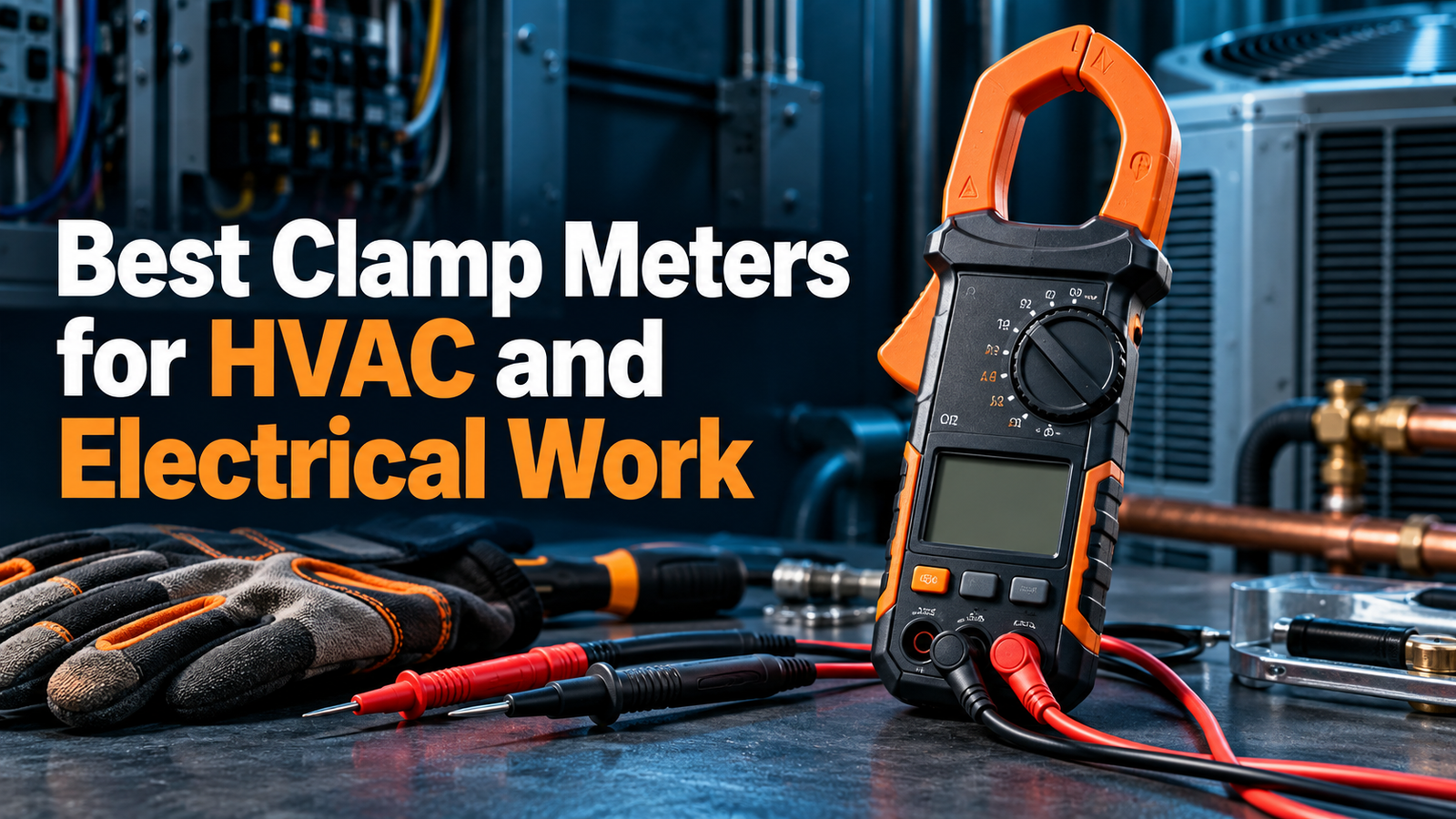
The best clamp meter should let an electrician or HVAC technician measure current efficiently while still providing the voltage, resistance, continuity, and specialty functions required for everyday troubleshooting. We compared seven practical options for residential service, commercial electrical work, HVAC diagnostics, industrial maintenance, and high-current applications.
Quick answer
The Fluke 325 is our best overall clamp meter for most electricians. It offers a useful balance of current measurement, core multimeter functions, portability, and professional build. HVAC technicians should consider the Fieldpiece SC680, while the Fluke 376 FC is the stronger choice for demanding industrial and high-current work. The Klein CL800 provides a feature-rich value alternative.
Check Fluke 325 Availability →
Our top clamp meter picks
| Model | Best for | Style | Main advantage |
|---|---|---|---|
| Fluke 325 | Most electricians | Compact clamp meter | Balanced everyday capability |
| Klein Tools CL800 | Value-conscious professionals | True-RMS clamp meter | Broad general-use feature set |
| Fieldpiece SC680 | HVAC/R technicians | HVAC clamp meter | HVAC-focused workflow |
| Fluke 376 FC | Industrial/high current | Flexible-probe compatible | Access and high-current capability |
| Milwaukee 2235-20 | Jobsite electrical work | Clamp meter | Simple rugged workflow |
| UEi DL379B | HVAC service | HVAC clamp meter | Practical trade-oriented functions |
| Amprobe AMP-320 | Commercial maintenance | AC/DC clamp meter | Versatile troubleshooting platform |
1. Fluke 325 — Best overall clamp meter
The Fluke 325 is a strong daily-carry choice for electricians who want a compact instrument without giving up the measurements used on routine service calls. It suits residential and commercial work, equipment checks, current measurements, voltage testing, continuity work, and quick comparisons during troubleshooting.
Its biggest advantage is balance. The jaw is easier to position than a bulky industrial clamp, the controls are straightforward, and the conventional probe inputs cover the core tasks for which a technician would otherwise reach for a separate multimeter. It is especially attractive when tool-bag space matters.
Choose it when you want one reliable clamp meter for varied electrical work. If you regularly work around very large conductors, tight bus arrangements, or industrial drives, a flexible current probe or a higher-tier model may be more appropriate.
- Best for: residential and commercial electricians
- Strength: useful balance of current and conventional meter functions
- Tradeoff: fewer specialized HVAC and industrial workflow features than dedicated models
2. Klein Tools CL800 — Best value for general electrical work
The Klein Tools CL800 is a practical choice for electricians who want broad capability at a more accessible level. Its clamp-first format handles current checks efficiently, while the test-lead functions support common voltage, resistance, continuity, and diagnostic tasks.
This model is a good fit for apprentices, independent contractors, maintenance teams, and experienced electricians who need a capable secondary meter. It can also be a sensible primary tool when your work involves frequent current measurement but does not justify the premium price of a specialized industrial platform.
As with any meter, verify the exact model and included accessories before ordering. Marketplace pages may combine kits, revisions, or bundles, and the leads or case shown in one photo may not be part of every package.
Check Klein CL800 Availability →
3. Fieldpiece SC680 — Best for HVAC technicians
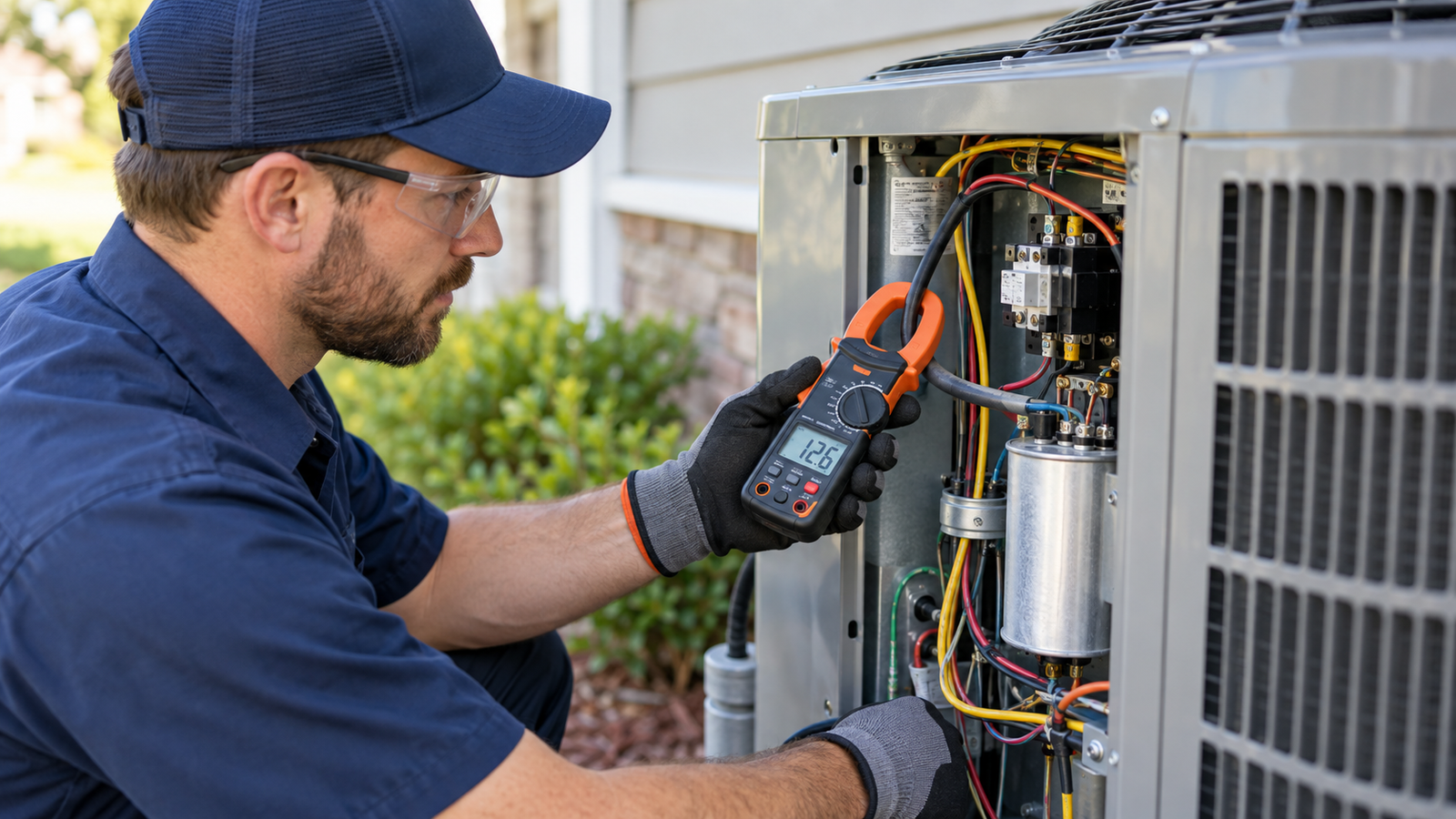
The Fieldpiece SC680 is designed around HVAC/R service rather than generic electrical testing. That distinction matters for technicians who diagnose compressors, blower motors, capacitors, controls, flame-sensing circuits, variable-speed equipment, and system performance during the same visit.
An HVAC-focused clamp meter can reduce the number of separate instruments carried to a rooftop or mechanical room. The body, clamp, accessory support, and available measurements are organized for technicians who move repeatedly between electrical and system diagnostics. This can make work faster and keep related readings on one familiar platform.
It is more meter than many residential electricians need. Buy it because the HVAC-specific functions match your work, not simply because it has a long feature list. Confirm which probes and accessories are supplied with the exact package you select.
View Fieldpiece SC680 on Amazon →
4. Fluke 376 FC — Best for industrial and high-current work
The Fluke 376 FC is the step-up recommendation for industrial electricians, plant maintenance teams, and technicians who need greater current-measurement flexibility. Its value is strongest around large conductors, crowded cabinets, motor circuits, distribution equipment, and situations where a standard rigid jaw cannot reach the desired conductor.
Compatibility with a flexible current probe can make difficult measurements possible without forcing a large jaw into limited space. Wireless connectivity can also support workflows where viewing or recording a reading away from the immediate measurement point improves convenience. These capabilities should complement, not replace, safe procedures and appropriate PPE.
The extra capability comes with greater cost and complexity. For standard residential service and light commercial work, the Fluke 325 or Klein CL800 may be easier to carry and more economical.
Check Fluke 376 FC Availability →
5. Milwaukee 2235-20 — Best straightforward jobsite option
The Milwaukee 2235-20 appeals to electricians who prefer a straightforward jobsite tool from a familiar professional-tool ecosystem. Its clamp-meter workflow is suited to common current and voltage checks during installation, repair, and maintenance.
Simple controls can be an advantage when a meter is used with gloves, in poor lighting, or during repetitive checks. A clear display, useful jaw opening, secure grip, and durable case often matter more in daily field use than rarely needed modes.
Compare its measurement functions carefully with your work. Technicians who require extensive HVAC measurements, DC-current capability, connectivity, or specialized industrial features should choose a model designed around those needs.
View Milwaukee 2235-20 on Amazon →
6. UEi DL379B — Practical HVAC service alternative
The UEi DL379B is another trade-oriented option for HVAC service technicians. It is intended for the mixture of current, voltage, resistance, capacitance, temperature, and related checks encountered during heating and cooling diagnostics.
Its appeal is practical coverage. A technician can carry one instrument for many routine service tasks instead of switching constantly between a general multimeter and separate specialty tools. That can be helpful when climbing ladders, working outdoors, or moving through several calls in a day.
Review the manual and package contents before buying, because accessory support and included probes affect how useful an HVAC meter will be on day one. If most of your work is building wiring rather than mechanical systems, a more general electrician-focused clamp meter may provide a cleaner interface.
Check UEi DL379B Availability →
7. Amprobe AMP-320 — Versatile commercial maintenance pick
The Amprobe AMP-320 is suited to commercial electricians and facility technicians who face a changing mix of branch circuits, motors, controls, panels, and equipment. It combines clamp-based current measurement with the conventional electrical functions required for general troubleshooting.
A versatile platform makes sense in maintenance departments where the next call could involve lighting, a motor load, a control transformer, an intermittent circuit, or a piece of building equipment. The meter should still be matched to the installation category and expected transient environment.
Inspect the exact leads, fuses, markings, and documentation rather than relying only on a marketplace title. A professional instrument is a complete measurement system, and its accessories are part of its safety performance.
View Amprobe AMP-320 on Amazon →
How to choose the best clamp meter
AC-only or AC/DC current
Some clamp meters measure alternating current only, while others measure both AC and DC current. Residential building loads and many HVAC circuits are primarily AC, but automotive systems, solar equipment, battery systems, controls, and some industrial applications can require DC-current measurement. Confirm the current type before buying.
Jaw size and conductor access
A large jaw may accept thicker conductors, but the meter can become harder to position in a crowded panel. A flexible current probe can be valuable around large or awkward conductors. Consider the conductors you actually encounter, the working clearance, and whether the jaw can close completely.
True-RMS measurement
Modern electronic loads, motor drives, LED drivers, controls, and variable-speed equipment can produce non-sinusoidal waveforms. A true-RMS meter is generally the appropriate choice when accurate AC measurements on distorted waveforms matter.
Inrush and min/max capture
Motors and compressors can draw a brief starting current that a normal live reading does not show clearly. An inrush function can help evaluate this event. Min/max capture is useful for intermittent voltage or current changes, but the meter’s capture behavior must be suitable for the event being investigated.
Conventional multimeter functions
A clamp does not eliminate the need for probes. Voltage, resistance, continuity, diode, capacitance, frequency, and temperature functions determine whether the instrument can replace a separate digital multimeter for your normal work. Choose the modes you will genuinely use.
How to use a clamp meter correctly
For current measurement, place the clamp around one conductor only. Clamping around an entire cable that contains both outgoing and returning conductors will often cause the magnetic fields to cancel and produce a misleading reading. The jaw must close fully, and the conductor should be positioned as the manufacturer directs.
Select the correct current type and range. If the meter supports DC current, follow its zeroing procedure before measurement. Keep fingers behind the protective barriers, avoid touching conductors or exposed metal, and do not exceed the ratings of the instrument, leads, accessories, or installation.
When using test leads, confirm that each lead is in the correct input jack before contacting the circuit. Leaving a lead in a current input and then attempting a voltage measurement can create a dangerous fault. Inspect the meter and accessories before every use.
Safety reminder
Electrical and HVAC service can expose technicians to shock, arc-flash, rotating equipment, stored capacitor energy, and unexpected starts. De-energize whenever the task permits, apply appropriate lockout procedures, verify the tester before and after use on a known source, and follow applicable training, PPE, and manufacturer instructions. This guide is not a substitute for professional safety procedures.
Understanding measurement categories
CAT ratings relate to the transient environment at different points in an electrical distribution system. They are not simply another way to state normal operating voltage. Work on receptacle-connected equipment, fixed building wiring, distribution panels, and service sources can involve different levels of available energy.
The complete setup is limited by its lowest-rated component. A well-rated meter used with unsuitable leads, clips, or adapters does not preserve the higher capability of the meter body. Removable probe caps may change exposed-tip length and category suitability, so use them as the manufacturer specifies.
Look for clear documentation and credible certification information for the exact model. Avoid assuming that a similar-looking meter or marketplace variation has identical protection.
Clamp meter vs digital multimeter
A clamp meter is usually the faster choice when current measurement is central to the task because it does not require placing the meter in series with the load. It also reduces the need to open a conductor for many measurements. A conventional digital multimeter is often more compact and may be better for detailed resistance, diode, electronics, and low-level troubleshooting.
Many professionals carry both. The clamp meter handles load and current checks, while the standard multimeter covers detailed probe-based diagnostics. If you want one tool, prioritize the measurements you perform most often and accept that a combined instrument may not be ideal for every specialty.
Which clamp meter should you buy?
Choose the Fluke 325 for the best all-around balance in residential and commercial electrical work. Pick the Klein CL800 for a feature-rich value option. HVAC/R technicians should compare the Fieldpiece SC680 and UEi DL379B. Industrial users who need flexible-probe access and a higher-level workflow should consider the Fluke 376 FC. The Milwaukee and Amprobe models provide useful alternatives for jobsite and commercial maintenance needs.
Compare Professional Clamp Meters on Amazon →
Frequently asked questions
What is the best clamp meter for electricians?
The Fluke 325 is our best overall choice for many electricians because it balances current measurement, essential probe-based functions, portability, and a professional field-oriented design. Specialized work may justify a different model.
What clamp meter is best for HVAC?
The Fieldpiece SC680 is the strongest HVAC-focused choice in this guide. The UEi DL379B is another practical trade-oriented alternative. Compare the exact measurements and included accessories with the systems you service.
Can a clamp meter measure voltage?
Many clamp meters measure voltage through test leads, but the clamp itself is normally used for current. Functions vary by model, so verify the manual and input ratings.
Can I clamp around an entire power cable?
Usually no. For current measurement, the jaw should surround one conductor. Clamping around both outgoing and returning conductors can cancel their magnetic fields and produce an incorrect reading.
Do I need AC/DC current measurement?
DC-current capability is important for batteries, vehicles, solar systems, and certain controls or industrial equipment. Electricians working mainly on standard AC building circuits may not need it for every job.
Is a clamp meter safer than a multimeter?
A clamp can reduce the need to open a circuit for many current measurements, but it is not automatically safe in every situation. Correct category ratings, condition, procedures, PPE, and training remain essential.
Continue this electrical-testing cluster with our guides to the best multimeters for electricians, best multimeters for home use, and best non-contact voltage testers.
Features that improve daily field use
Small usability details often determine whether a clamp meter becomes a trusted daily tool or stays in the truck. A strong backlight helps inside dark equipment cabinets, while a display that remains readable from an angle is useful when the meter hangs above eye level. A magnetic strap or hanging accessory can keep the instrument visible and free both hands for probe placement. A responsive hold button helps when the display cannot be seen while the clamp is positioned.
Auto-ranging is convenient for quick checks, but manual range control can stabilize a changing display and make comparisons easier. A fast continuity response reduces frustration during repeated wiring checks. Automatic power-off protects the battery, though technicians should understand how the feature behaves during long monitoring tasks. A low-battery warning is important because weak batteries can affect reliability.
Physical design matters as well. The trigger should open the jaw smoothly with one hand, and the jaw surfaces should close cleanly without trapped debris. A compact body fits crowded panels, but a larger body may provide a bigger display and easier controls. There is no perfect size for every technician, so consider gloves, hand size, tool storage, and the equipment you normally service.
Care, inspection, and long-term ownership
Inspect the clamp meter before each use. Look for cracks, contamination, damaged jaw surfaces, loose input jacks, worn buttons, and unreadable safety markings. Flex test leads gently near the probe and connector strain reliefs; intermittent conductors can cause false readings and unsafe troubleshooting decisions. Replace damaged accessories with properly rated compatible parts.
Keep the jaw faces clean because dirt or damage can affect current readings. Store the meter in a protective case away from moisture, extreme heat, metal debris, and chemicals. Disconnect leads before changing batteries or fuses, follow the service instructions, and never substitute a fuse with an incorrect type or rating.
Calibration and verification needs depend on the work. A technician making comparative service checks may follow a different schedule from a facility that records acceptance data under a quality program. A known-source functional check can reveal an obvious failure, but it is not a substitute for calibration when traceability is required. Remove the instrument from service after a severe drop, overload, contamination event, or unexplained reading until it can be evaluated.
How we selected these picks
We organized the recommendations around real buying intents rather than unverifiable marketplace ratings: everyday electrical service, value-focused professional use, HVAC diagnostics, industrial and high-current access, jobsite simplicity, and commercial maintenance. We considered intended measurement functions, form factor, workflow, accessory ecosystem, and suitability for different trades.
Specifications, bundles, and availability can change. Confirm the exact model number, current manual, included accessories, and seller details before ordering. We do not quote prices because they change frequently, and we do not claim hands-on test results that were not independently performed.
