
Affiliate disclosure: As an Amazon Associate I earn from qualifying purchases. We may also earn a commission from qualifying Walmart purchases through our links, at no extra cost to you.
Klein ET310 review: identify the breaker before buying more tools
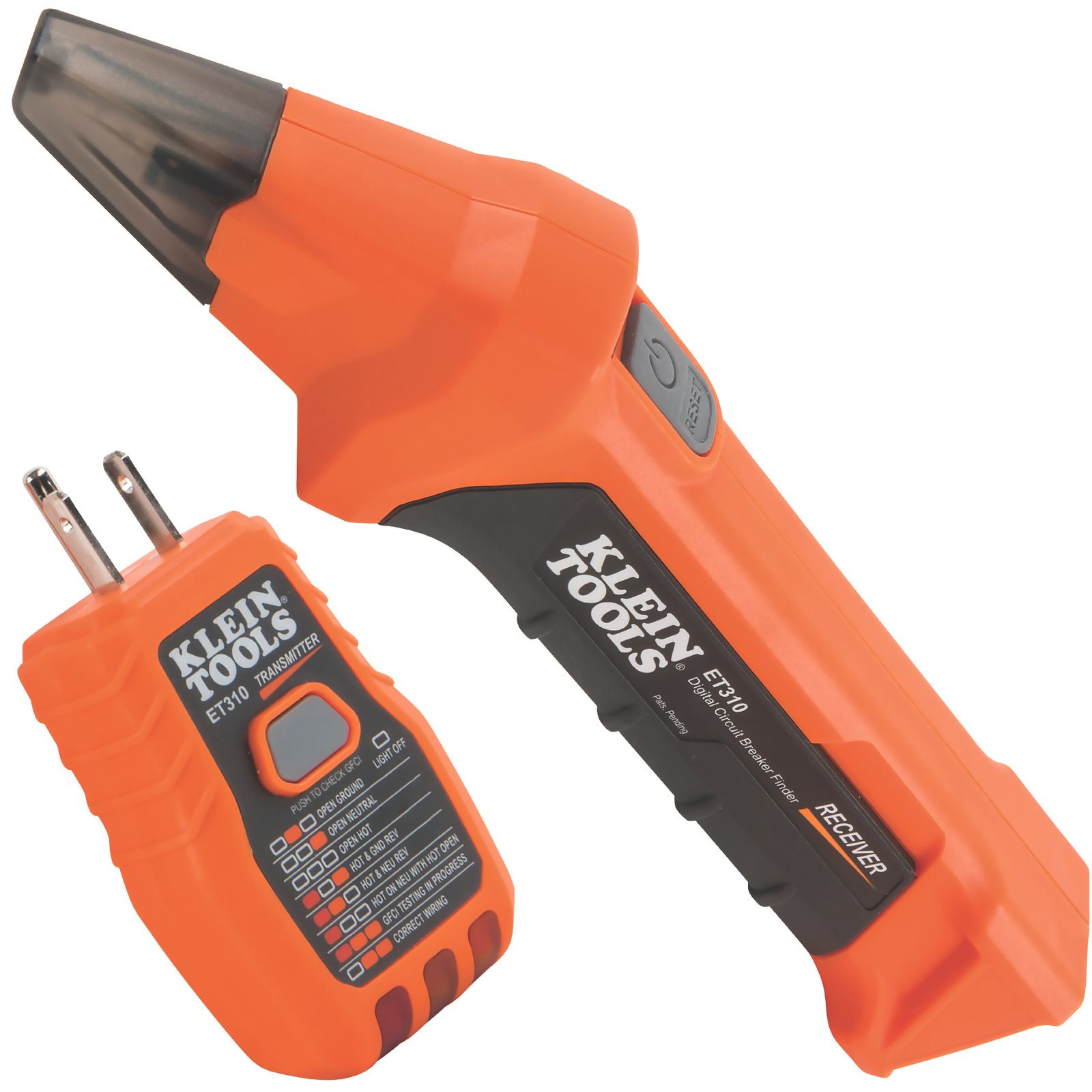
The Klein ET310 addresses a specific problem: finding which breaker supplies a compatible energized outlet. This buying guide explains the tool’s role, its limits, and how to compare the same set at Amazon and Walmart.
Quick verdict
Consider the ET310 when your main goal is mapping compatible U.S. household outlet circuits. Its separate transmitter and receiver suit that task, and the transmitter adds an outlet-testing function. Choose a different tool if you need to trace a cable’s route, inspect every possible wiring problem, or work outside the manufacturer’s voltage limits.
Review method: This is a research-based assessment using Klein’s product information and instructions. AccurateGoods has not independently tested this unit, measured its detection performance, or certified its safety.
Amazon vs Walmart: compare the exact ET310 offer
Research date: October 17, 2026. A dependable two-store current price comparison could not be completed. The accessible Amazon listing did not provide a featured price. Walmart’s search snapshot displayed $43.99, but that snapshot is not a confirmed checkout quote. We have therefore not declared a cheaper retailer or calculated a claimed saving.
| Comparison point | Amazon | Walmart |
|---|---|---|
| Product reference | ET310, ASIN B07QNMCVWP | ET310, item 953949760 |
| Price evidence | No dependable featured price available | Search snapshot: $43.99; verify live |
| Delivered total | Check seller, shipping, and tax | Check seller, shipping, and tax |
| Package check | Confirm receiver and transmitter | Confirm receiver and transmitter |
| Price winner | Not determined without matching current totals | |
Use the buttons below to open the specific product listings. Compare a new ET310 set against the same new set, with the same delivery address. Do not compare a replacement transmitter, a carrying case, or a larger accessory bundle against the basic tool and call the difference a discount.
Check Amazon PriceCheck Walmart Price
What the ET310 actually does
Klein describes the ET310 as a two-part circuit breaker finder for 90–120V AC circuits. The transmitter connects at a compatible outlet or fixture, and the receiver scans the breaker panel. The receiver supplies visual and audible indications. The transmitter also includes a GFCI outlet tester. Those features make it a candidate for circuit identification; they do not turn it into a universal electrical diagnostic instrument.
The most useful question is whether this is the problem you are trying to solve. If an old directory says “bedroom” but several rooms have changed over the years, a mapping tool may be worth considering. If you already know the breaker and only want an outlet wiring indication, a simpler tester may fit your needs. Buying a more elaborate tool is not automatically the better decision.
Who should consider buying it?
Homeowners improving a panel directory
A clear circuit directory can save confusion later. Think of the purchase as support for a careful mapping project rather than a shortcut that replaces verification. Use descriptions that another person could follow, such as a room name plus a recognizable wall or appliance location. Keep notes that distinguish confirmed observations from labels you inherited.
People planning several small home projects
Repeatedly identifying outlet circuits can become inconvenient when you have several rooms to document. A dedicated finder may help organize that work. Before buying, list how often you expect to use it and whether the circuits fall within its stated application. An occasional need may justify borrowing a suitable tool or asking an electrician to map the circuits instead.
Buyers who want a focused tool
The ET310 is easiest to judge when you treat it as a focused purchase. A long list of unrelated features can distract from the job you need done. Prioritize correct application, understandable indications, access to the instructions, and a seller who will handle a defective unit. Those factors may matter more than a small difference in the advertised item price.
When a different tool makes more sense
A wire tracer and a breaker finder answer different questions. Identifying a breaker is different from following the physical path of a wire through a wall. A device intended for one task should not be assumed to perform the other. If you need cable tracing, compare tools specifically designed and rated for that application.
An outlet tester also has a narrower purpose than a complete inspection. A normal-looking indication cannot establish that every part of a circuit is safe. If you see damage, smell burning, encounter repeated trips, or have unexplained electrical behavior, stop the project and arrange qualified help. Purchasing a finder does not resolve an underlying installation fault.
For context, read our circuit breaker finder vs outlet tester guide and wire tracer vs circuit breaker finder comparison.
Important limits before you use a breaker finder
Finding a breaker does not prove a circuit is de-energized. Do not begin electrical work solely because a finder indicated a breaker or because an outlet lamp went out. Follow the applicable safe isolation and verification procedures for the work, using appropriate equipment. If you are not trained to verify the condition safely, hire a qualified electrician.
Keep the panel’s protective dead-front cover installed. This guide does not require removing panel covers or approaching exposed energized conductors. A damaged panel, missing cover, loose outlet, wet location, or visibly damaged tester is a reason to stop rather than experiment. Read the complete manufacturer instructions and all warnings before use.
Plan around the people and equipment using the circuit. Switching a breaker or operating a GFCI test can interrupt connected loads. Notify other occupants and account for computers, appliances, alarms, and any equipment that must remain powered. Good planning avoids turning a simple identification job into an unexpected interruption.
Why the scanning process matters
The manufacturer describes an initial scan followed by another scan to identify the breaker. A hurried single pass is therefore not a fair way to assess the tool. Follow the supplied sequence, receiver placement, and reset instructions rather than improvising a method from a short video or assuming that every finder works identically.
When more than one position seems plausible, do not select whichever result you prefer. Recheck the instructions and the setup. Record uncertainty instead of adding a confident label. If the result remains unclear, involve an electrician. The goal is a dependable directory, not a fast-looking demonstration.
Read Klein’s ET310 instruction manual before purchase as well as before use. Seeing the actual workflow can help you decide whether the controls and intended application match your needs.
ET310 set, replacement part, or accessory kit?
Marketplace search results can mix full tools with accessories. Look beyond the first line of the title. Confirm the model number, package contents, condition, and selected option. A listing saying “compatible with ET310” may be a storage case rather than a circuit breaker finder. Product photographs are useful, but they should agree with the written description.
A replacement part may be the right purchase if you already own the matching system. It is a poor comparison for someone starting from nothing. Likewise, a bundle with adapters can cost more because it contains more equipment. Decide what you actually need before comparing the base set with a kit.
Avoid buying extra adapters simply because a bundle looks impressive. Connections beyond an ordinary compatible outlet may require additional knowledge and a suitable accessory. Do not improvise leads or modify a plug. Have a qualified person handle connections or tasks that fall outside your competence.
How to choose between Amazon and Walmart
Start with the selected seller
A marketplace name and a seller name are different things. Check who is selling the exact offer and who handles fulfillment. Read the current return instructions attached to that offer. If a seller’s product description is inconsistent, ask for clarification or select a clearer offer before spending money.
Compare the delivered price
Write down item price, shipping, tax, and the final total for each store. Apply only discounts you actually qualify for. Do not count a possible coupon or membership benefit as guaranteed until it appears in your total. A lower headline price can disappear after shipping is included.
Check the condition and return window
New, used, and refurbished offers deserve separate comparisons. If you choose a previously owned tester, inspect the description carefully and consider whether you can evaluate its condition appropriately. The lowest amount is not necessarily good value when the item is incomplete or difficult to return.
Consider timing without rushing
A convenient arrival date may matter when an electrician is scheduled or a home project is already planned. Verify the displayed date for your location. Do not let an urgency badge push you into buying the wrong model or an unsuitable bundle. A deliberate check usually takes less time than correcting a mistaken order.
What to check when your order arrives
Compare the received contents with the invoice and listing before discarding packaging. Look for signs of impact, broken housing, bent plug components, missing pieces, or corrosion. Follow the instructions for the battery and initial checks. Do not put visibly damaged electrical test equipment into service.
Keep your order record and a copy of the stated package contents. If something is missing, report the specific problem promptly within the applicable return process. Clear photographs of the item and packaging can help the seller understand the issue. Avoid taking the tool apart while you are deciding whether to return it.
A better way to document the result
Prepare a simple worksheet before you begin: location, existing label, observed breaker, date, and any uncertainty. Use plain location names. “North bedroom, window wall” is more useful than “plug 3” if nobody else knows where numbering begins. Keep the worksheet legible and store it where it can be found later.
Do not assume every outlet in the same room shares a circuit. Treat each result as specific to the point you checked. If later work changes the wiring or layout, update the directory. A useful record is a maintained description of the installation, not a one-time document that stays accurate automatically.
If a result conflicts with the existing label, preserve the uncertainty until it is resolved. Photographing the original directory before making changes provides a reference. Avoid relabeling breakers based only on a guess, a nearby room, or an old owner’s note.
Pros and tradeoffs
Reasons to consider the ET310
- A focused solution for identifying compatible outlet circuits.
- A separate transmitter and receiver keep the task clearly divided.
- Published instructions are available before purchase.
- Listings at both retailers make offer comparison possible.
Reasons to pause
- It does not replace safe isolation or a complete electrical inspection.
- The intended voltage and application limits matter.
- Package variants can make price comparisons misleading.
- We could not verify matching current checkout totals at both stores.
Frequently asked questions
Is Walmart cheaper than Amazon for the Klein ET310?
We have not verified that. Walmart’s accessible search snapshot showed an amount, while Amazon’s accessible page did not supply a dependable featured price. Check both current delivered totals before choosing.
Can the ET310 replace a voltage tester?
Do not use a breaker-finder result as proof that electrical work is safe to begin. Use the appropriate verification process and equipment for the work, or have a qualified electrician perform it.
Does it find a cable’s route inside a wall?
That is a different task from identifying the supplying breaker. Buy a tool specifically intended and rated for cable tracing if that is your requirement.
Should I buy the basic set or an accessory bundle?
Choose according to the connections and jobs you can safely carry out. Compare the exact included items and avoid paying for accessories you do not need or are not qualified to use.
Choose the right offer for the right task
The ET310 is worth considering for compatible outlet-circuit mapping when you understand its limits. Confirm the full set, seller, delivered price, and return terms. We recommend comparing both offers rather than assuming either retailer is always cheaper.
Sources and editorial notes
Research uses Klein’s official ET310 product page, its instruction manual linked above, and the Amazon and Walmart listings linked in the comparison. The quoted Walmart price evidence is a search snapshot, not a live offer. The featured ET310 product image is supplied by Klein Tools; the credited electrical-panel photograph provides general context. Neither image documents an AccurateGoods hands-on product test. For more options, see our best circuit breaker finder guide.
