
Disclosure: AccurateGoods may earn a commission from qualifying purchases made through links on this page, at no extra cost to you.
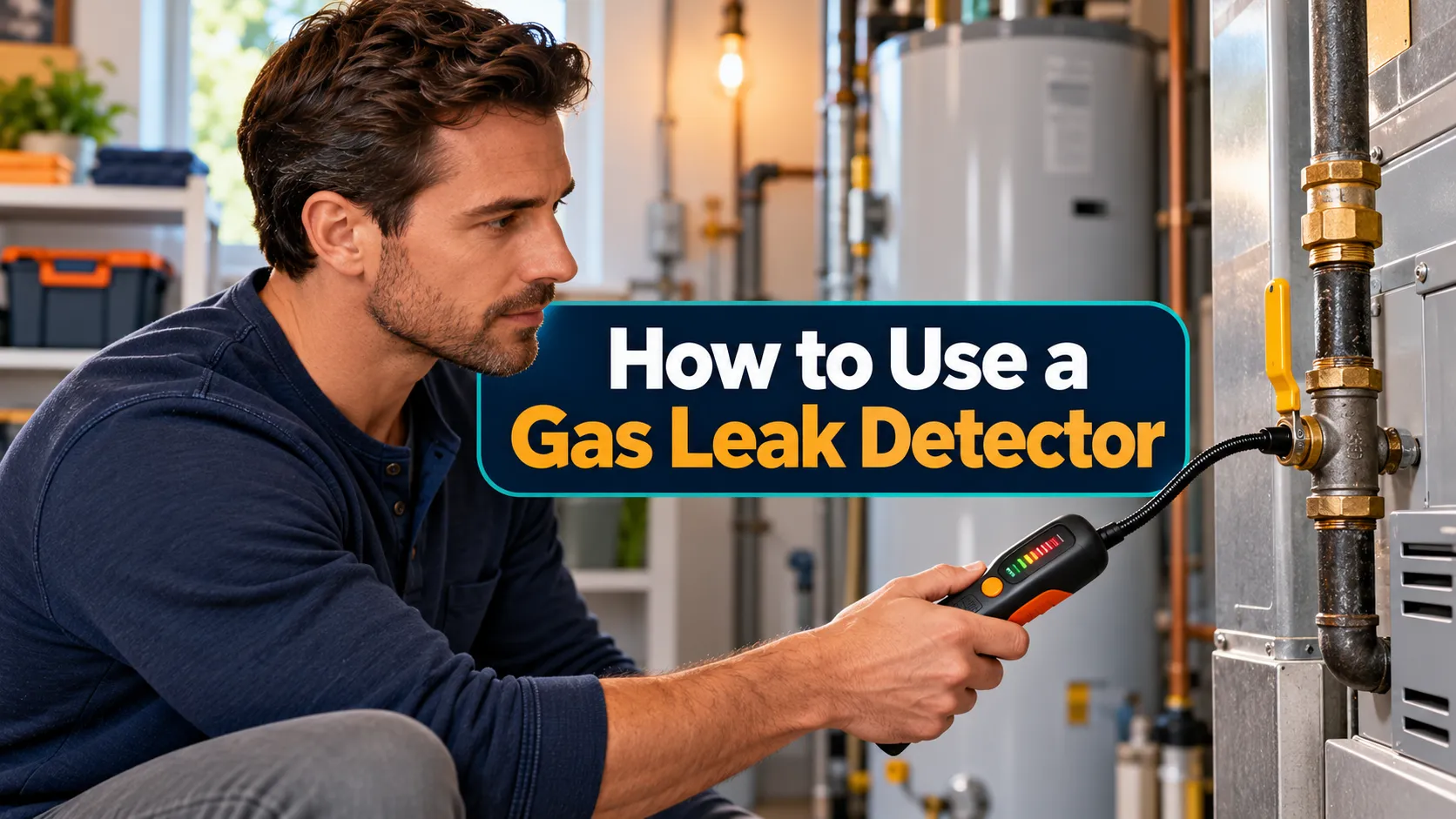
A handheld combustible-gas detector can help you pinpoint small natural-gas or propane leaks around accessible fittings—but only when there is no active emergency. The safe method is to power it on in clean air, allow the self-test and warm-up to finish, then move the sensor slowly around joints, valves, unions, and connectors while following the instructions for your exact model.
A combustible-gas sniffer is not a carbon-monoxide alarm or a refrigerant leak detector.
Many meters establish their baseline during power-up, so contaminated startup air can mislead the reading.
Trace accessible joints and fittings methodically instead of waving the probe through the room.
Never use a detector reading as permission to ignore odor, symptoms, or an emergency warning.
Choose the Right Kind of Gas Detector
“Gas detector” is a broad label. For household natural gas or propane, look for a combustible-gas leak detector whose manual lists methane and propane. A carbon-monoxide alarm serves a different purpose: it warns about poisonous carbon monoxide created by incomplete combustion, not raw fuel leaking from a fitting. Refrigerant detectors are built for HVAC refrigerants and should not be substituted for a combustible-gas instrument.
| Tool | What it detects | Typical use |
|---|---|---|
| Combustible-gas detector | Methane, propane, and other listed flammable gases | Locating a suspected leak at accessible pipes and appliance connections |
| Carbon-monoxide alarm | Carbon monoxide | Continuous life-safety monitoring in occupied spaces |
| Refrigerant detector | Model-specific HVAC refrigerants | Diagnosing air-conditioning and refrigeration systems |
| Fixed natural-gas alarm | Listed combustible gas, continuously | Ongoing warning; not a substitute for handheld pinpointing or professional inspection |
Check the fuel list, operating range, warm-up procedure, sensitivity controls, audible/visual/vibration alerts, replacement sensor availability, and calibration guidance before buying. A long flexible probe is useful around water heaters, ranges, furnaces, meters, and tight pipe runs. For electrical checks near home projects, see our guide to the safe way to check whether a wire is live.
Check Combustible Gas Leak Detectors on Amazon →
Before You Test: Know When Not to Test
A handheld detector is a diagnostic tool, not emergency-response equipment or personal protective equipment. If the odor is strong, a pipe is damaged, an alarm is sounding, you hear escaping gas, or anyone has headache, dizziness, nausea, confusion, or weakness, leave. Do not hunt for the source, close a valve unless responders specifically direct you, or attempt ventilation by operating electrical equipment.
Never test in a confined space, pit, crawlspace, or other area where gas may accumulate unless you are trained, properly equipped, and following an appropriate entry procedure. Do not smoke, light a match, use a lighter, create a spark, start a vehicle, plug or unplug anything, or use a phone inside the suspected area. Call from outside and upwind when possible.
How a Handheld Gas Leak Detector Works
Most consumer sniffers draw or expose surrounding air to a sensor and respond when the target combustible gas rises above the instrument’s current baseline. Beeps, colored lights, a bar display, or vibration generally intensify as the probe reaches a higher concentration. That change is most valuable for locating a source; it should not be treated as a laboratory measurement unless the instrument is designed, calibrated, and specified for quantitative readings.
Startup matters. Klein Tools, for example, instructs users to turn its ET120 on in an area known to be free of combustible gases. The instrument performs automatic zero-point calibration during power-up. Other products differ, so the manual supplied with your meter always controls. Sensor contamination, weak batteries, extreme temperature, silicone vapors, cleaning chemicals, airflow, and an overdue calibration can all affect response.
How to Use a Gas Leak Detector: Step by Step
1. Read the model’s manual
Confirm the detector is approved for the gas, environment, and task. Note its warm-up time, zeroing method, sensitivity modes, alarm pattern, operating temperature, calibration schedule, and limitations. Install fresh batteries and inspect the probe, sensor cap, case, and display for damage.
2. Start in known clean air
Move outdoors or to another location the manufacturer considers free of combustible gas. Power on the meter and keep it away from solvents, gasoline vapors, exhaust, alcohol cleaners, and silicone products. Wait for every self-test, warm-up, and zeroing indicator to finish. Do not assume flashing lights during self-calibration are a leak alert; verify the pattern in the manual.
3. Verify that the instrument is ready
Check the battery indicator and normal-ready signal. Professionals often perform a bump test with an approved test-gas source to confirm sensor and alarms respond; never improvise with an unapproved gas source or open flame. If your manufacturer specifies a bump test or calibration, follow that procedure exactly.
4. Begin with the broader sensitivity setting
If the detector offers high and low sensitivity, follow its manual for the recommended search sequence. A practical approach on many sniffers is to use the less sensitive setting to identify the general area, then switch to higher sensitivity for pinpointing. Keep the probe clear of liquid, dirt, and hot surfaces.
5. Scan accessible leak points slowly
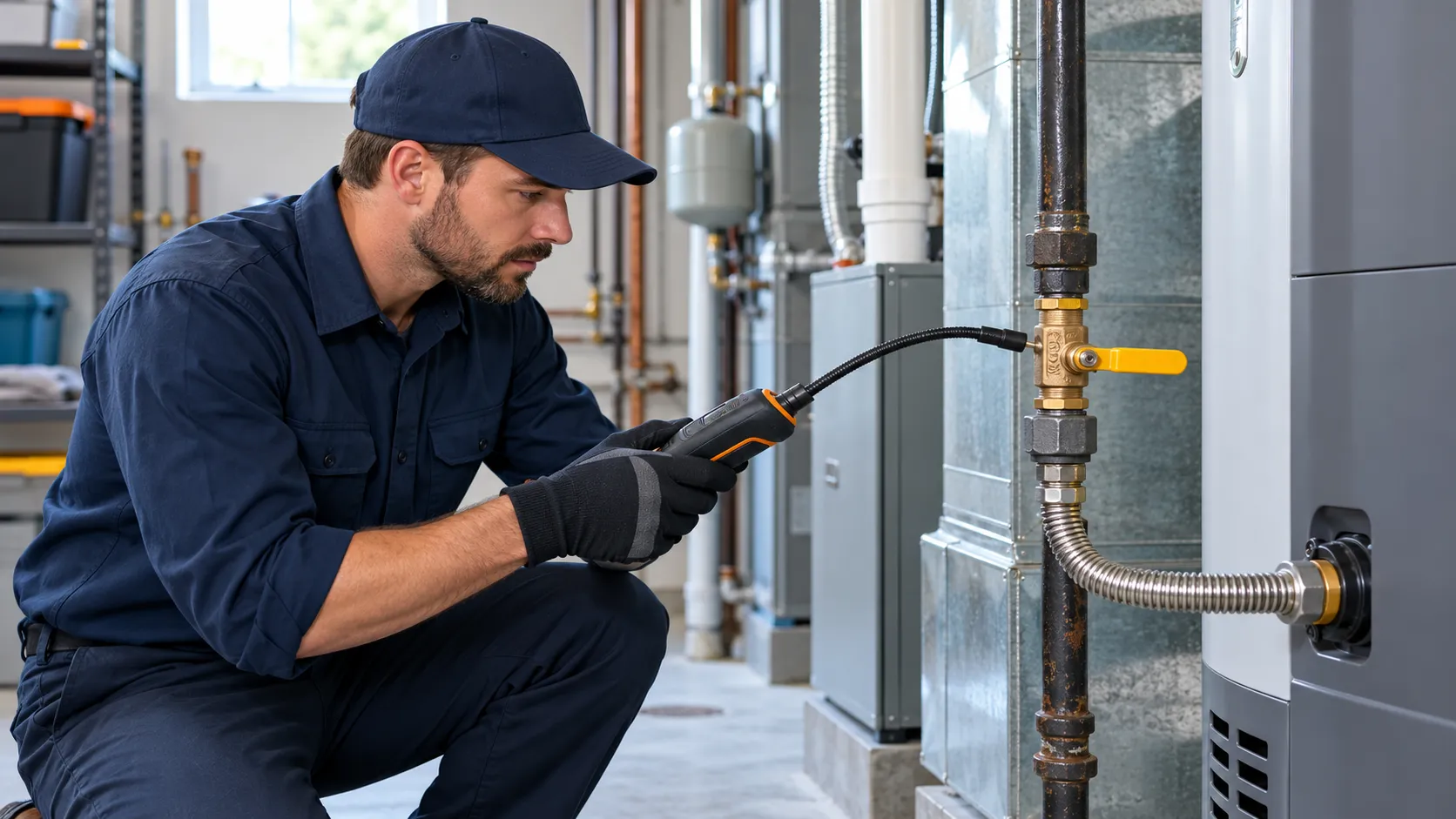
Bring the sensing tip near—but do not scrape it against—pipe joints, unions, valve stems, regulator connections, appliance shutoffs, flexible connectors, and where the connector enters the appliance. Move methodically around the full circumference of each connection. Pause long enough for the detector’s stated response time. Avoid random fast sweeping, which can miss a small plume.
6. Account for the gas and airflow
Natural gas is primarily methane and normally rises, while propane vapor is heavier than air and may collect low. Air movement can carry a plume away from the actual leak. Scan around and slightly above natural-gas fittings, and around and below propane components, while still tracing every accessible joint. Never crawl into a low enclosed area to follow a reading.
7. Narrow the location
When the alert rate increases, back away until it falls, approach again from another direction, and reduce the search area. Use the appropriate sensitivity mode so the meter is not continuously saturated. Repeat the pass to make sure the response is reproducible and not caused by a nearby solvent, fuel can, exhaust source, or contaminated sensor.
8. Stop safely and call a qualified professional
If the detector repeatedly alerts, treat it as a suspected leak. Leave the area and contact the utility or a licensed gas professional from a safe location. Do not tighten, disconnect, seal, or replace gas fittings unless you are legally permitted, trained, and following the required shutdown, pressure-test, and inspection procedures.
Compare Adjustable-Sensitivity Gas Detectors →
Where to Scan Around Common Appliances
Only inspect components you can reach without dismantling equipment or entering an unsafe area. Around a range, trace the shutoff valve and flexible connector connections; do not pull the appliance abruptly or kink the connector. At a water heater or furnace, check the accessible shutoff, union, sediment-trap joints, and appliance inlet, staying clear of burners and hot surfaces. Around a gas meter, do not disturb seals, regulators, or utility-owned components—report an alert to the utility.
A borescope may help visually inspect a route, but it is not a gas sensor and should not be inserted into a suspected hazardous atmosphere unless it is rated for that use. Our guide explains how to use an inspection camera inside walls. Likewise, a thermal camera may reveal temperature patterns but cannot confirm raw gas; read what thermal cameras can and cannot show about leaks.
How to Interpret Beeps, Lights, and Bars
Focus on the pattern described by your manual. A steady ready tone may indicate normal operation; an accelerating beep or rising bar graph commonly indicates increasing concentration. A sensor-fault, low-battery, over-range, or calibration warning is not the same as a normal gas alert. Stop and identify the warning before continuing.
Do not compare bar counts between different models or translate them into percent gas without a manufacturer-provided scale. A handheld sniffer may respond to several combustible vapors, so an alarm identifies a hazard or source that needs investigation, not necessarily the exact chemical. If a reading is strong enough to saturate the instrument, withdraw to clean air and follow emergency guidance.
View the Klein Tools ET120 on Amazon →
Common Mistakes That Cause False Confidence
- Zeroing in the suspect room: the detector may treat existing gas as its baseline.
- Moving too quickly: the sensor may not have time to respond.
- Testing only the center of the room: small leaks are easier to locate close to the source.
- Ignoring wind and ventilation: airflow can shift or dilute the plume.
- Using a dead or overdue sensor: a powered display does not prove the sensing element responds.
- Assuming “no beep” means “safe”: wrong sensor type, poor technique, contamination, or a leak below the detection threshold can all produce a non-alert.
- Using flame to confirm: never use a match, lighter, torch, or any ignition source.
Electrical safety matters near appliances too. A non-contact voltage tester can be useful for preliminary electrical screening, but it does not detect gas and does not make a potentially explosive atmosphere safe.
Can You Use Soapy Water?
Approved leak-detection solution can reveal bubbles at a specific accessible joint, and trained technicians may use it as part of a controlled test. Household soap mixtures can corrode some components, make weak bubbles, contaminate equipment, or tempt a user to keep working in a dangerous area. Never apply any solution to live electrical parts, hot surfaces, regulators, or components where the manufacturer prohibits it.
If you already have a strong odor or an electronic detector gives a persistent alert, do not stay inside to perform a second test. Exit and call for professional help. A utility or licensed technician can isolate the supply, use calibrated equipment, pressure-test the piping where required, repair the fault, and verify the system before it returns to service.
Handheld Detector vs. Fixed Alarm
A handheld sniffer is for deliberate inspection and localization. A listed fixed alarm remains in place and monitors continuously. Many homes benefit from both, but neither replaces required smoke and carbon-monoxide alarms. Placement rules vary with the gas, alarm design, manufacturer, fuel-burning equipment, and local code—install every fixed alarm according to its listing and instructions.
For hidden-wall work, avoid drilling based on a single sensor. Combine drawings and visual inspection with appropriate locating tools. See whether a stud finder can detect wires and our damage-minimizing method for finding studs behind plaster.
Shop Gas Detectors for Home Inspection →
Maintenance, Calibration, and Storage
Store the detector in its case in a clean, dry place away from fuel, solvents, silicone products, and extreme heat or cold. Remove batteries for long storage if the manual recommends it. Inspect the sensing tip before every use, replace batteries promptly, and never immerse the probe or clean it with unapproved chemicals.
Sensors age even when the meter looks new. Record the purchase date, sensor-replacement interval, and any required calibration. If the instrument fails a self-test or approved bump test, displays a fault, has been dropped, was exposed beyond its range, or behaves inconsistently, remove it from service until it is checked according to the manufacturer’s procedure.
Frequently Asked Questions
Can a gas leak detector find both natural gas and propane?
Many combustible-gas detectors can detect methane and propane, but not every model has the same fuel list or sensitivity. Verify both gases in the specifications and manual before use.
Should I turn on a detector inside the room I want to test?
Usually no. Many models establish a clean-air baseline at startup. Turn the detector on in an area known to be free of combustible gas and follow the model-specific warm-up and zeroing instructions.
Does a gas detector replace a carbon-monoxide alarm?
No. Raw combustible gas and carbon monoxide are different hazards. Keep properly placed smoke and carbon-monoxide alarms even if you own a handheld gas sniffer.
What should I do if the detector alarms?
If the alert is persistent or you smell gas, leave without operating switches or electronics, then call emergency services and the gas utility from a safe outdoor location. Do not attempt a DIY repair.
How often should a gas leak detector be calibrated?
There is no universal interval. Follow the manufacturer’s calibration, bump-test, sensor-replacement, and service schedule for your specific instrument and application.
Final Verdict
The right combustible-gas detector is a valuable locating tool when the situation is stable and the user follows the manual. The safest workflow is simple: recognize emergencies first, start and zero in clean air, scan accessible fittings slowly, interpret alarms conservatively, and let qualified professionals repair and verify gas systems. Never allow a quiet meter to overrule your senses, a fixed alarm, or an evacuation warning.
