
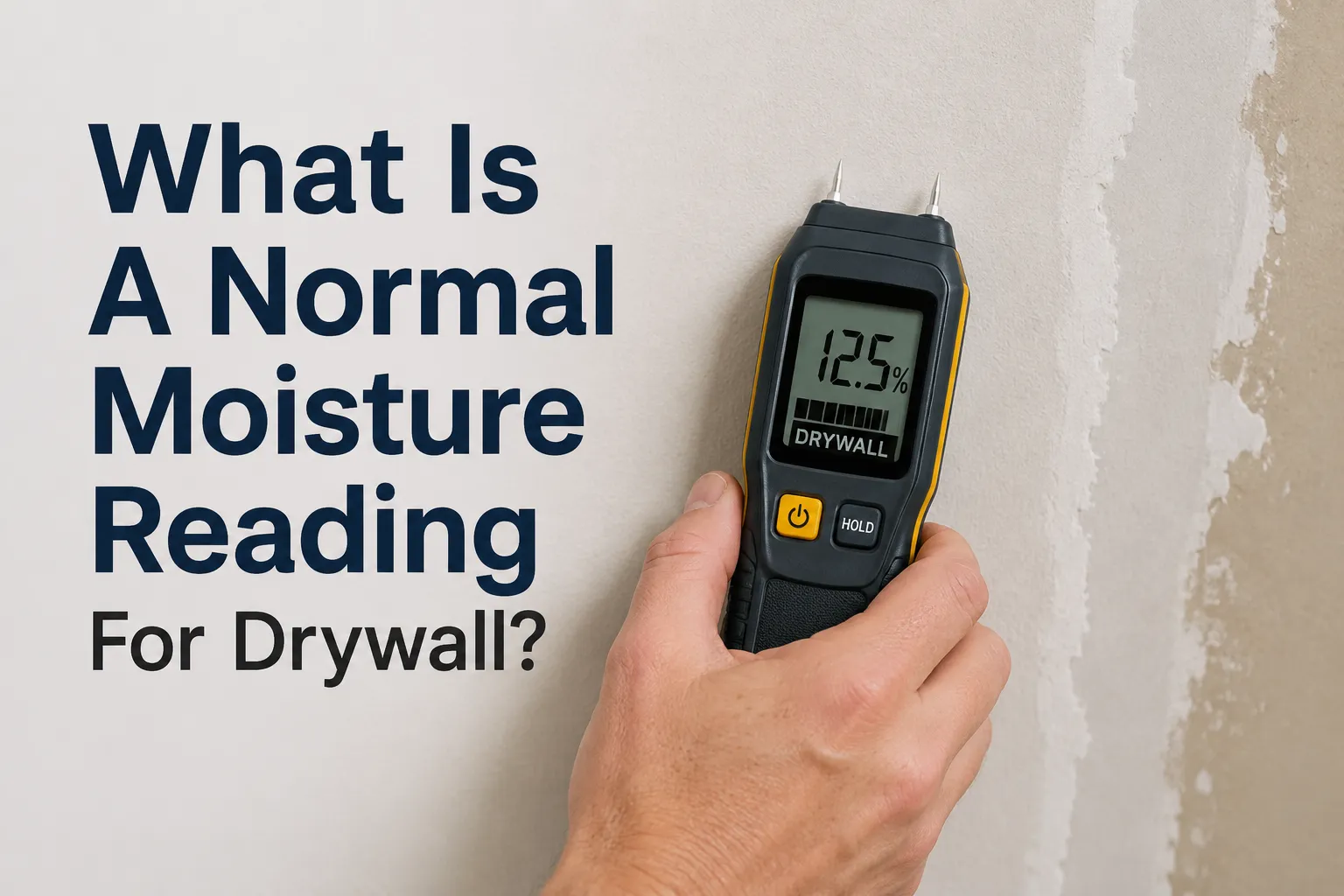
A normal moisture reading for drywall is usually close to the meter’s dry baseline, often around 0.5% to 1% on many pin meters or in the low “dry” range on pinless meters. The exact number depends on the meter, the wall material, and the room conditions, so the best reading is one that matches nearby dry drywall.
If you are checking a wall after a leak, spill, or damp smell, the real question is not just the number on the meter. It is whether that reading is higher than the surrounding wall and whether it is dropping over time. That is how we judge if drywall is drying normally or still holding moisture.
In this guide, we explain what a normal drywall reading looks like, what numbers should make you pay attention, and how to test the wall the right way. We also cover common causes of moisture, signs of hidden damage, and when wet drywall should be repaired or replaced.
What Is a Normal Moisture Reading for Drywall?
Drywall does not have one universal “normal” number. A reading is only useful when you compare it to a dry area in the same room, on the same wall type, with the same meter.
Typical “dry” range on a moisture meter
For many pin-style moisture meters, drywall often reads in a low range that reflects dry indoor conditions. That may be around 0.5% to 1% moisture content on some meters, but the exact number depends on the tool and its scale.
With pinless meters, you usually see a relative scale instead of a true percentage. In that case, “dry” is the baseline reading from an area that is known to be dry. If the suspected area is much higher than that baseline, it deserves a closer look.
Why drywall readings can vary by meter type
Different meters work in different ways. Pin meters measure electrical resistance between two pins pushed into the surface. Pinless meters scan below the surface using electromagnetic signals. Because of that, the same wall can show different numbers on different tools.
That is why we do not treat one reading as the final answer. We look for patterns, not just a single number. The most useful reading is the one that is repeatable and clearly different from nearby dry drywall.
How drywall compares to framing lumber and other materials
Drywall usually reads differently from framing lumber, plaster, tile backer, or concrete. A wall cavity may have dry drywall on the surface while the wood behind it still holds moisture. That is one reason pinless meters are useful for scanning, while pin meters can help confirm a wet spot at a specific point.
For framing lumber, many people consider the material dry when readings are roughly in the low teens or below, depending on the species and conditions. Drywall is not judged the same way, so do not compare it directly to wood without checking your meter’s material settings and chart.
What Moisture Reading Is Considered Safe, Questionable, or Too Wet?
Normal drywall moisture reading range
| Reading level | What it usually means | What to do |
|---|---|---|
| Normal / dry baseline | Matches nearby dry drywall | No action needed unless symptoms are present |
| Slightly elevated | Could be drying, humidity, or minor seepage | Monitor and retest |
| Clearly elevated | Possible active leak or hidden wet material | Investigate the source |
| Very high / wet | Likely saturation or ongoing intrusion | Act quickly and assess for damage |
The safest reading is the one that matches a dry reference area nearby. If your meter shows the same wall section reading much higher than the rest of the room, that is more important than the exact number.
Slightly elevated readings that need monitoring
A reading that is a little above the dry baseline does not always mean a leak. It may be leftover moisture from recent cleaning, a humid day, or a wall that is still drying after minor exposure. These readings should be watched, not ignored.
If the number stays stable or drops over a day or two, that is a good sign. If it rises, spreads, or appears in a larger area, the problem may still be active.
Readings that suggest active moisture intrusion
When a wall section reads clearly higher than the surrounding drywall and the reading does not improve, we start thinking about active moisture intrusion. That can come from plumbing, roofing, windows, or condensation inside the wall assembly.
If the wall also feels soft, looks stained, or has a musty smell, the reading is more likely to reflect a real problem than a temporary change in humidity.
Mold risk rises when drywall stays damp long enough for growth to start. The meter cannot tell you if mold is present, but it can show conditions that support it. A high reading in a wall that has been wet for days or weeks is a red flag.
According to the U.S. Environmental Protection Agency’s mold guidance, moisture control is the key step in preventing mold growth indoors. That is why a persistently wet wall should be treated as a moisture problem first, then checked for damage and contamination if needed.
How to Measure Moisture in Drywall Correctly
Choose the right moisture meter for drywall
Use a meter that is suitable for building materials and can read drywall accurately. Pinless meters are handy for scanning larger wall areas, while pin meters are useful when you want a more exact reading at one spot.
If your meter has settings for drywall, softwood, or building materials, use the setting recommended by the manufacturer. For some models, the instructions from brands like FLIR can help you understand how the meter interprets wall moisture.
Prepare the wall surface before testing
Wipe away surface dust, paint flakes, or condensation before testing. Surface dirt can interfere with contact on pin meters and can sometimes affect pinless readings too.
Also make sure the wall is not freshly washed or wiped down. If you test right after cleaning, you may read leftover surface moisture instead of moisture inside the drywall.
Take multiple readings across the affected area
Do not rely on one spot. Take readings in a grid or across a line that crosses the suspected wet area. This helps you see where moisture starts, peaks, and fades.
Multiple readings also help you spot a leak pattern. For example, a wet area around a pipe chase or near a ceiling line may point to the source faster than a single number ever could.
Compare wet spots to nearby dry reference areas
Always test a nearby wall section that you know is dry. That gives you a baseline. The difference between the dry spot and the suspect spot is usually more useful than the raw number alone.
If both areas read high, the room may have a general humidity problem. If only one area reads high, the issue is more likely localized.
Record readings for follow-up drying checks
Write down the date, time, location, and readings. This makes it easier to tell whether the wall is drying or getting worse. A simple note on your phone works fine.
If you plan to dry the wall, retest at the same spot each day. That gives you a clear trend line and helps you decide whether the wall is improving.
What Causes Drywall Moisture Readings to Be Higher Than Normal?
Plumbing leaks inside walls
Hidden plumbing leaks are one of the most common reasons drywall reads wet. A slow leak from a supply line, drain, or fitting can soak the back of the wall long before you see visible damage.
These leaks often show up near sinks, tubs, showers, laundry rooms, and behind toilets. If the meter reading is high near plumbing, do not assume it is just humidity.
Roof leaks and window intrusion
Water can travel down from a roof leak and show up far from the entry point. Window leaks can also wet the drywall around frames, sills, and corners.
These problems often leave stains, peeling paint, or soft spots near the top of a wall or around openings. The meter helps confirm whether the visible damage is still damp.
Condensation from poor ventilation
Bathrooms, kitchens, laundry rooms, and closets can trap moisture if ventilation is weak. Warm indoor air can condense on cooler wall surfaces, especially in colder months.
In these cases, the reading may be slightly elevated without a clear leak. Better airflow, exhaust fan use, and lower indoor humidity can help.
Flooding, spills, and past water damage
Drywall can stay affected long after a flood or spill. Even if the surface looks dry, moisture may still be trapped inside the board or behind the paint layer.
That is why old water damage should still be tested. A wall that was once wet can become a future problem if it was not fully dried.
Humidity changes and seasonal conditions
Seasonal humidity can shift wall readings a little. Summer air often carries more moisture, while winter heating can dry indoor surfaces. These changes can move readings up or down without a leak being present.
That is normal as long as the reading stays close to the dry baseline and does not form a clear hot spot.
How to Tell If a Drywall Reading Means a Real Problem
Surface moisture may come from condensation, cleaning, or a brief spill. Hidden damage is more serious because it means water is inside the wall or behind it. A surface reading often drops quickly after the surface dries, while hidden moisture tends to linger.
Check for staining, soft spots, bubbling, or odors
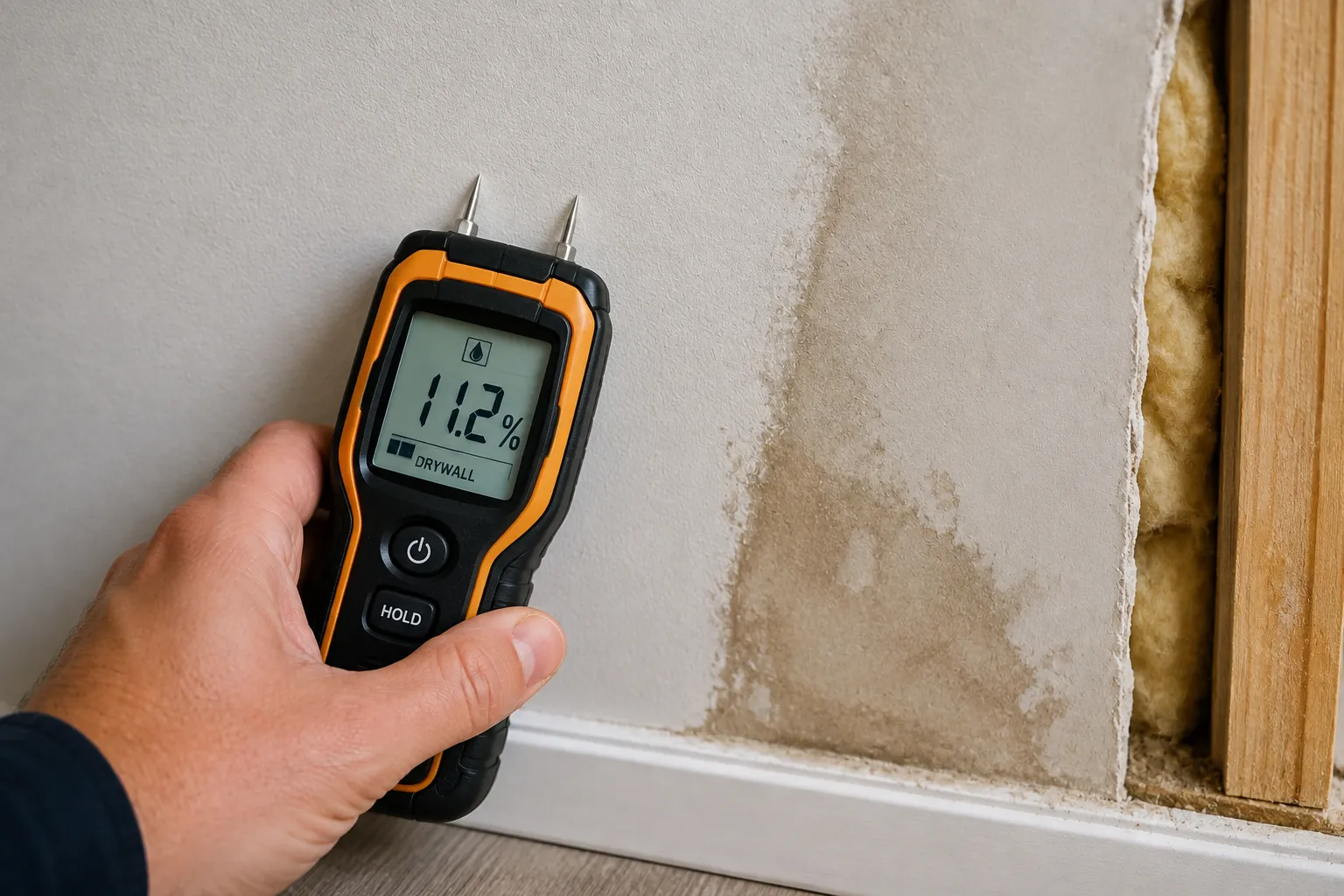
Moisture readings make more sense when you pair them with visual clues. Yellow stains, bubbling paint, sagging drywall, soft spots, and musty odors all support the idea that the wall is damaged.
If the wall looks normal but the meter reads high, test more nearby areas before deciding what to do.
Compare readings on both sides of the wall
If you can safely access the opposite side of the wall, compare both sides. A wet reading on one side and a dry reading on the other can help you narrow down the source.
This is especially useful around bathrooms, kitchens, and laundry walls, where plumbing and appliances may affect only one side.
Use temperature and humidity context to interpret results
Indoor humidity and room temperature matter. A cool wall in a humid room can read higher than expected, even if there is no leak. A dehumidifier or better ventilation may lower the reading over time.
For a more complete picture, use a simple hygrometer to check room humidity while you test the wall.
When to retest after drying
Retest after 24 hours if the wall is actively drying, and keep checking daily until readings settle near the dry baseline. If the reading does not drop, the wall may still be wet inside.
Do not rush to close up a wall that still reads high. Trapped moisture can lead to bigger repairs later.
Best Moisture Meter Practices for Drywall Testing
Pin meters vs. pinless meters for drywall
- Pinless meters scan large wall areas quickly
- Pin meters give a direct reading at a specific point
- Both can help when used with a dry baseline
- Using the wrong material setting
- Trusting one reading without comparison
- Testing over metal, nails, or uneven surfaces
Pinless meters are often easier for drywall because they do not leave holes. Pin meters can be better when you need a more exact spot check or want to test a suspicious area that pinless scanning flagged.
Pros of pinless scanning for quick inspections
Pinless meters are fast, clean, and good for mapping a wall. They help you find the edges of a damp area without poking lots of holes in the drywall.
They are especially useful when you want to compare a large area after a leak or during a home inspection.
Pros of pin meters for pinpointing wet areas
Pin meters can be useful when you need a direct reading at one location. They are often better for checking a suspected wet spot, confirming a hidden leak path, or tracking drying progress in the same place over time.
Just remember that the pins create small holes, so use them where that is acceptable.
Limitations and common false readings
False readings can happen if the wall has metal, dense paint, wallpaper, adhesive, insulation changes, or fasteners behind the surface. Some meters also react to temperature differences or wall composition.
That is why we always recommend checking several points and comparing them with a known dry area.
When professional thermal imaging adds value
Thermal imaging can help find temperature patterns that suggest moisture, but it does not replace a moisture meter. It is most useful when the wet area is hidden or when you need to trace the path of water inside a wall.
For a broader view of moisture-related building issues, the National Institute of Standards and Technology offers guidance and research on building performance and measurement methods.
When to Dry, Repair, or Replace Wet Drywall
Situations where drying is enough
If the drywall only has a slightly elevated reading, no visible damage, and the number drops as the room dries, drying may be enough. Better airflow, a fan, and lower humidity can help the wall return to normal.
Signs drywall should be cut out and replaced
Drywall should often be replaced if it is swollen, crumbling, soft, sagging, or still reading wet after drying efforts. If the paper face is damaged or separated, the board may not recover well.
Why mold-contaminated drywall is different
Drywall that has been wet for too long can support mold growth. Once mold is established, drying alone may not solve the problem. The damaged material may need removal, and the source of moisture must be fixed first.
If you see visible mold, smell a strong musty odor, or suspect contaminated water, do not keep sealing or painting over the wall. Fix the moisture source and assess the material properly first.
How long drywall should stay under observation
After a leak or spill, keep an eye on the wall until readings return to the dry baseline and stay there. For minor dampness, that may take a day or two. For bigger incidents, it can take longer.
If the reading plateaus or rises again, the wall may still hold moisture behind the surface.
Cost of Ignoring Elevated Drywall Moisture Readings
Repair costs for minor leaks vs. major wall replacement
A small leak caught early may only need a simple plumbing repair and a small drywall patch. If the problem stays hidden, the repair can grow into a larger wall removal, insulation replacement, and repainting job.
Mold remediation cost factors
Mold work can become more expensive when the affected area is large, when the source is hard to reach, or when materials must be removed carefully. The longer the wall stays wet, the more likely the repair bill grows.
Structural damage and insulation replacement expenses
Wet drywall can also affect insulation, wood framing, trim, and flooring edges. Once those materials are involved, the repair scope gets bigger and the cost goes up.
Why early moisture detection saves money
Early testing gives you a chance to fix a problem before it spreads. That is the main value of a moisture meter: it helps you catch a hidden issue while the repair is still manageable.
Common Questions About Normal Moisture Readings for Drywall
The ideal reading is the same as nearby dry drywall in the same room. On many pin meters, that often means a very low reading near the dry baseline, but the exact number depends on the meter and material setting.
It can be. A 12% reading may be higher than normal for drywall, especially if nearby areas read much lower. It may point to moisture intrusion, but you should compare it with a dry reference area and check for visible signs of damage.
Yes, sometimes it can. If the drywall was only damp and the source is fixed quickly, drying with airflow and lower humidity may be enough. If the board stayed wet for too long, it may need replacement.
Compare the suspect area with nearby dry spots. If several areas in the room read a little high, humidity may be the cause. If one spot is much higher than the rest, a leak is more likely.
Yes, if you use it correctly and compare readings carefully. Pinless meters are useful for scanning, but they work best when you confirm suspicious spots with more than one reading and, if needed, a second test method.
- Always compare the suspect wall to a known dry area nearby.
- Test at the same height and location each time you retest.
- Use the meter’s correct material setting before you trust the number.
- Look for a trend over time, not just one reading.
- Pair moisture readings with visual signs like stains, soft spots, and odors.
The reading stays elevated after drying, the wall feels soft or swollen, or you suspect a hidden leak behind the drywall. At that point, a plumber, water-damage pro, or mold specialist may be needed.
A normal drywall moisture reading is not one fixed number. It is a reading that matches nearby dry drywall and stays low over time. If the number is clearly higher than the rest of the wall, keep testing, find the source, and act before the damage spreads.
- Normal drywall readings should match a dry baseline nearby.
- Slightly elevated readings need monitoring and retesting.
- High readings can point to leaks, condensation, or past water damage.
- Visual clues and room humidity help explain the meter result.
- Wet drywall that does not dry may need repair or replacement.
