
Finding a bad bulb in Christmas lights does not have to be slow or frustrating. This guide shows fast, safe ways to spot the problem, test the strand, and get your lights working again with less guesswork.
How to Find a Bad Bulb in Christmas Lights Fast and Easy
Christmas lights look simple from the outside. But when one strand goes dark, they can turn into a tiny holiday tech problem. You plug them in, and nothing happens. Or maybe half the string works and the rest stays dim. That is when you start asking the same question every year: how to find a bad bulb in Christmas lights without testing every single one by hand?
The good news is that there are fast ways to do it. You do not need special skills. You just need a basic plan, a little patience, and the right method for your light type. Whether you are dealing with old incandescent strings or modern LED strands, the steps below will help you find the bad bulb in Christmas lights with less stress and less wasted time.
This guide is built for real-world use. It covers quick checks, smart tools, and simple fixes. It also explains when a strand can be repaired and when it is better to replace it. If you are setting up a tree, roofline, or outdoor display, this is the kind of troubleshooting trick that saves time every season.
- Point 1: A dead bulb can stop an entire strand, so start with the easiest checks first.
- Point 2: Always unplug the lights before you inspect or remove any bulb.
- Point 3: Use visual clues, a bulb tester, or section testing to find the bad bulb fast.
- Point 4: LED and incandescent lights can fail in different ways, so the fix is not always the same.
- Point 5: Replacing a burned-out bulb with the correct type and voltage matters for safety and performance.
- Point 6: If the strand has heavy damage, it is often better to replace it than keep repairing it.
📑 Table of Contents
- Why Christmas Lights Go Out
- Start With the Fastest Checks
- How to Find a Bad Bulb in Christmas Lights Step by Step
- LED vs Incandescent: What Changes
- Tools and Specs That Make the Job Easier
- Common Mistakes to Avoid
- When to Repair and When to Replace
- Best Practices for Faster Troubleshooting Next Year
- Conclusion: The Fastest Way to Find the Bad Bulb
Why Christmas Lights Go Out
One bad bulb can affect the whole string
Many Christmas light strands are wired in a series or series-parallel setup. That means one bad bulb can interrupt power to part or all of the string. In older incandescent sets, a single failed bulb often causes the whole strand to go dark. In some LED sets, the problem may only affect one section, but the strand can still look broken or uneven.
Heat, age, and loose connections are common causes
Bulbs fail for simple reasons. They get old. They shake loose. Water gets in. Outdoor use is hard on wiring. If a strand has been bent, stored tightly, or used for many seasons, the chance of a bad bulb goes up. This is why learning how to find a bad bulb in Christmas lights is such a useful skill.
Not every dark strand has a bulb problem
Sometimes the issue is not the bulb at all. A blown fuse, damaged plug, broken wire, or loose socket can cause the same result. That is why you should not jump straight to bulb replacement. A quick check can save you from pulling apart a perfectly fine string.
Start With the Fastest Checks
Check the outlet and plug first
Before you inspect the bulbs, make sure the outlet has power. Test it with another device. Then look at the plug for damage. If the lights are plugged into a timer, smart plug, or extension cord, test the strand directly in the wall. This simple step rules out a lot of false alarms.
Look for the dark or damaged bulb
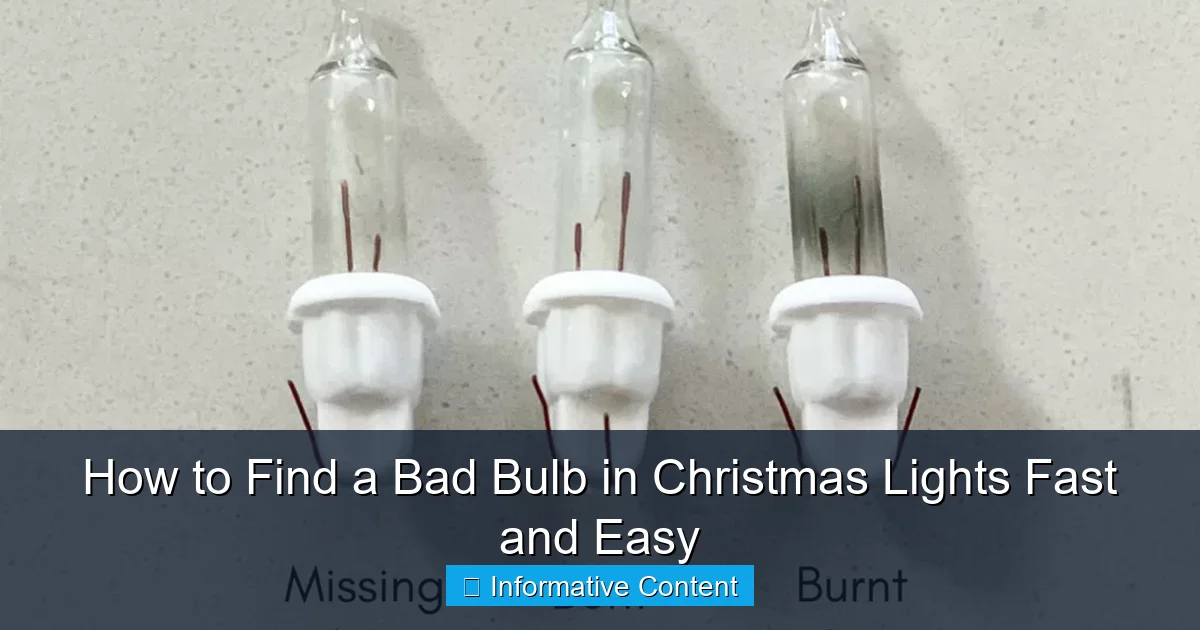
Once the lights are unplugged, scan the strand closely. A bad bulb may look blackened, cloudy, cracked, or loose in the socket. On some LED strings, the failed bulb may not look different at all. Still, a visual check is worth doing first because it can reveal obvious damage fast.
Check the fuse in the plug
Many light strings have small fuses inside the plug. If the whole strand is dead, a blown fuse may be the real issue. Open the fuse compartment carefully and inspect both fuses. Replace only with the same type and rating. If you are also using decorative bulbs like a [60 watt clear incandescent light bulb](https://accurategoods.com/60-watt-clear-incandescent-light-bulb/) in other home setups, you already know how important correct bulb specs are for safe operation.
How to Find a Bad Bulb in Christmas Lights Step by Step
Method 1: Use the wiggle test
This is one of the easiest tricks. With the lights unplugged, gently wiggle each bulb in its socket. A loose bulb may not be making a solid connection. Push it in firmly and twist it slightly if the design allows it. Then plug the strand in again to see if it comes back on.
This works best on older incandescent strings and some replaceable LED sets. It is fast, simple, and often enough to solve the problem in minutes.
Method 2: Use a bulb tester
A bulb tester is the fastest tool for people who deal with Christmas lights often. It checks whether a bulb is working without guessing. Some testers are pen-shaped, while others are built for specific bulb sizes. Touch the tester to each bulb or socket as directed by the tool.
If you decorate every year, a tester is worth buying. It turns a slow hunt into a quick scan. For people who also enjoy maintaining other light products, like the [best outdoor solar fairy lights](https://accurategoods.com/best-outdoor-solar-fairy-lights/), having a small light-testing tool can be a smart part of your seasonal toolkit.
Method 3: Divide the strand into sections
If you do not have a tester, test the strand in sections. Plug in half the string if possible. If one half works and the other does not, you know the problem is in the dead section. Keep narrowing it down until you isolate the bad bulb or bad socket.
This method is slower than a tester, but it works well. It is also useful for longer commercial-style strings or large outdoor displays.
Method 4: Replace bulbs one at a time
If the string uses replaceable bulbs, you can swap suspected bulbs with known good ones. Start with the bulb closest to where the power stops. Replace it with a matching spare and test the strand. If nothing changes, move to the next bulb.
This method is simple, but it takes time. It is best when you have a spare bulb kit and only a few bulbs to check.
LED vs Incandescent: What Changes
Incandescent lights are easier to diagnose visually
Incandescent bulbs often show signs of failure. You may see a darkened bulb, broken filament, or melted base. These strands are usually easier to troubleshoot because the bad bulb is more obvious. If one bulb goes out, the rest of the strand may fail too, which makes the bad section easier to spot.
LED lights can be trickier
LED strings are more efficient and last longer, but they can be harder to diagnose. A failed LED may not look damaged. Sometimes the problem is not the LED itself but the rectifier, resistor, or a bad connection in the socket. That is why a tester or section method is so helpful.
Some LED sets are non-replaceable
Many modern LED Christmas lights are sealed or have limited repair options. If the bulbs are not meant to be replaced, you may not be able to fix the exact bad bulb. In that case, the best move is to identify the failed section and decide whether repair is worth the time. If the strand is cheap and heavily damaged, replacement may be the smarter choice.
Tools and Specs That Make the Job Easier
What to keep in your troubleshooting kit
A simple Christmas light repair kit does not need to be fancy. A good setup might include:
- Spare bulbs that match your strand
- A small bulb tester
- A fuse kit
- Electrical tape
- Small needle-nose pliers
- A flashlight or headlamp
These tools help you move quickly and safely. You do not want to be searching for batteries or spare parts while standing on a ladder in the cold.
Match the bulb type and voltage
Always use the correct replacement bulb. A bulb that looks close enough may still be wrong. Check the voltage, base style, and bulb shape. If the replacement does not match, the strand may not work right, and it could become unsafe. This is especially important for older incandescent strings and specialty decorative bulbs.
Check for outdoor ratings
If your lights are used outside, the replacement parts should be rated for outdoor use. Weather exposure changes everything. Moisture, snow, and temperature swings can damage cheap components fast. If you are also shopping for other outdoor lighting, such as [colored bulbs for outdoor string lights](https://accurategoods.com/colored-bulbs-for-outdoor-string-lights/), make sure the product is built for the environment where it will be used.
Common Mistakes to Avoid
Do not test while the lights are plugged in
This is the biggest safety mistake. Always unplug the strand before touching the bulbs, sockets, or wires. Even low-voltage-looking lights can still deliver a shock or cause a short if you handle them the wrong way.
Do not force a bulb into the socket
If a bulb does not fit easily, stop. Forcing it can crack the socket or bend the contacts. A damaged socket can create a new problem that is harder to fix than the original bad bulb.
Do not mix random spare bulbs
It is tempting to use any spare that looks close. But mismatched bulbs can change how the strand performs. They may be too bright, too dim, or incompatible with the circuit design. Use the correct replacements whenever possible.
Do not ignore signs of wire damage
If you see cracked insulation, exposed copper, or melted plastic, stop using the strand. A bad bulb is one thing. Damaged wiring is another. In that case, replacing the whole string is often the safest option.
When to Repair and When to Replace
Repair makes sense for small, simple problems
If the strand has one bad bulb, a blown fuse, or a loose connection, repair is usually worth it. This is especially true for higher-quality lights or custom displays. A quick fix can save you from buying a whole new set.
Replace the strand if failures keep coming back
If you keep finding new bad bulbs every season, the strand may be at the end of its life. Repeated failures usually mean the wiring is aging, the sockets are worn, or moisture has done damage. At that point, replacement is often cheaper than repeated repairs.
Think about long-term value
Sometimes spending a little more on a better-built strand saves money later. Better seals, thicker wire, and replaceable bulbs can make a big difference. This is a lot like choosing a better outdoor lighting product for the home. A well-made set lasts longer and gives you fewer headaches. If you want to compare light quality and build style, browsing products like a [warm white LED outdoor flood light bulb](https://accurategoods.com/warm-white-led-outdoor-flood-light-bulb/) can help you think about brightness, durability, and efficiency in a more practical way.
Best Practices for Faster Troubleshooting Next Year
Label and store your lights well
Good storage prevents many bulb problems. Wrap strands loosely. Do not crush them in a box. Keep replacement bulbs and fuses in the same container. If you label each strand by tree, roofline, or window, setup gets easier next season.
Test lights before you hang them
Do not wait until the ladder is up and the hooks are in place. Test each strand on the floor first. This saves time and keeps you from hanging a dead string. It also makes it easier to find a bad bulb in Christmas lights before you commit to the full install.
Keep a backup strand ready
Even with good care, lights fail. A backup strand is a simple insurance plan. It keeps your display on schedule if a repair takes longer than expected. For larger setups, this is one of the best habits you can build.
Conclusion: The Fastest Way to Find the Bad Bulb
If you want the shortest path to a fix, start with the plug, the fuse, and a close visual check. Then use a bulb tester or divide the strand into sections. That is the fastest way to find a bad bulb in Christmas lights without wasting an hour on guesswork.
For most people, the best approach is simple: unplug first, inspect second, test third, and replace only with the correct part. If the strand is old, damaged, or sealed in a way that makes repair hard, replacing it may be the better choice. But if the lights are still in good shape, a fast bulb check can bring them back to life in minutes.
So the next time your holiday display goes dark, do not panic. Use the steps above, stay safe, and you will know how to find a bad bulb in Christmas lights fast and easy.
Frequently Asked Questions
If the entire string is dark, one bulb, a fuse, or a broken connection may be interrupting power. Start by checking the plug and fuse, then look for a loose or dark bulb. On older incandescent strands, one failed bulb can stop the whole set.
Yes. You can use the wiggle test, section testing, or swap in known good bulbs one at a time. A tester is faster, but it is not required for basic troubleshooting.
LED lights often fail in a more subtle way. The bulb may not look burned out, and the issue may be a connection or small circuit part instead. That makes testing a little more important with LED strands.
Yes, as long as the lights are unplugged and you use the correct replacement bulb. Never force a bulb into the socket, and stop if you see damaged wiring or melted parts.
If the strand still does not work after checking bulbs, fuses, and connections, the problem may be in the wiring or plug. At that point, replacing the strand is often the safest and fastest option.
Store them carefully, avoid tight bends, and test them before hanging each season. Using quality lights and keeping spare bulbs handy also helps reduce problems over time.

Tech & Gadget Reviewer
Ethan Walker is a tech enthusiast and gadget reviewer with over 8 years of hands-on experience testing consumer electronics, smart home devices, and cutting-edge accessories. He helps readers make smarter buying decisions through honest, in-depth reviews.