
A 9-inch magnetic torpedo level is the best all-around choice for most electricians
Choose a rigid frame, strong magnet, readable vials and a V-groove that sits securely on conduit. Illuminated vials help in dark cabinets and rough-ins; a digital angle finder earns its premium when you repeatedly set bends, pitch or target angles.
Everyday sweet spot: 9 in + magnetic edgeAffiliate disclosure: As an Amazon Associate, AccurateGoods may earn from qualifying purchases at no additional cost to you. Product specifications and availability may change. Confirm the exact model, ASIN and current manufacturer guidance before buying.
Top Electrician Level Picks
Each recommendation serves a different workflow: lighted everyday work, numeric angle layout and simple battery-free checks.
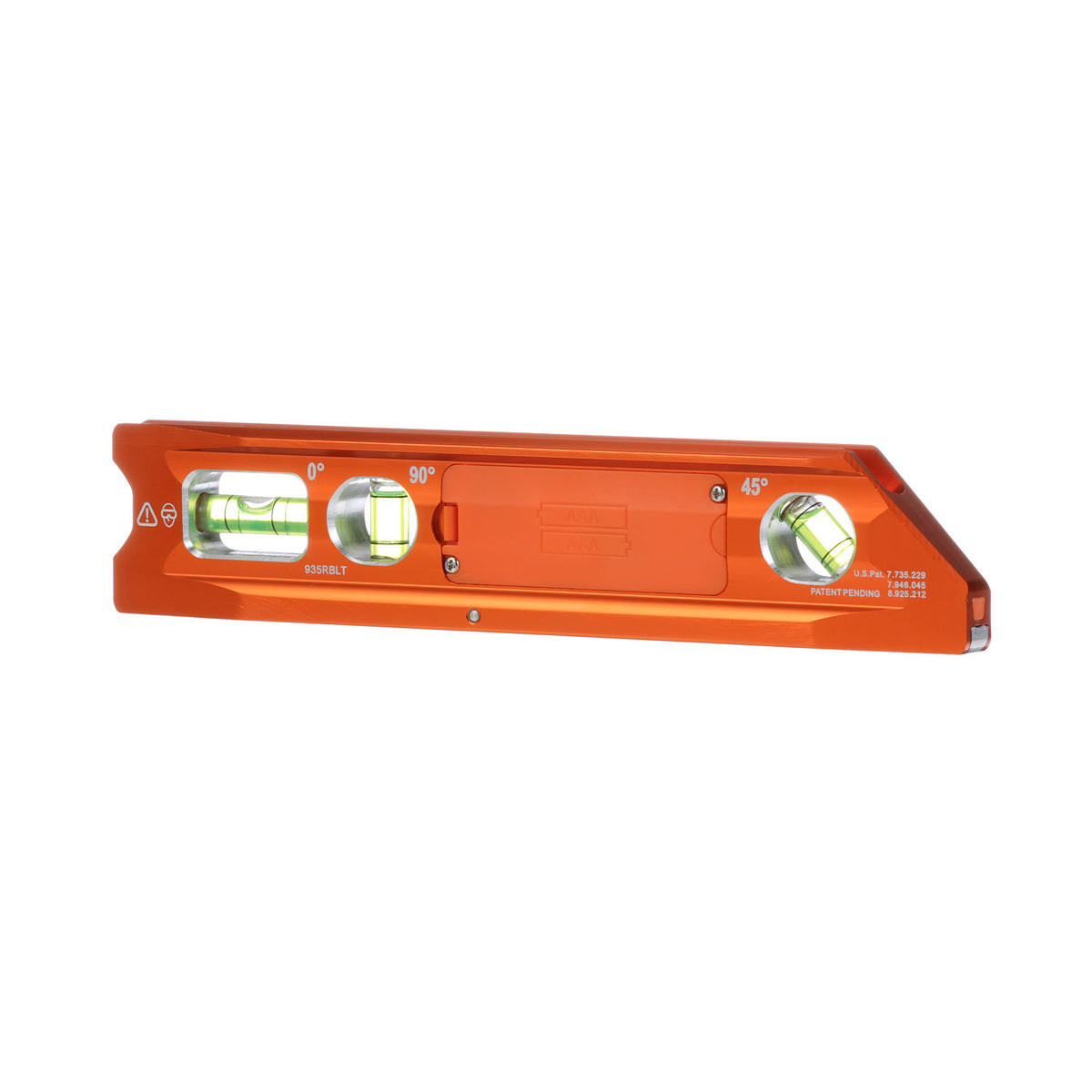
Klein Tools 935RBLT
A 9-inch magnetic billet-aluminum level with three illuminated vials and a conduit-friendly V-groove.
Best for: Daily electrical work and low-light spaces.
- 0°, 45° and 90° lighted vials
- Rare-earth magnetic track
- V-groove; two AAA batteries
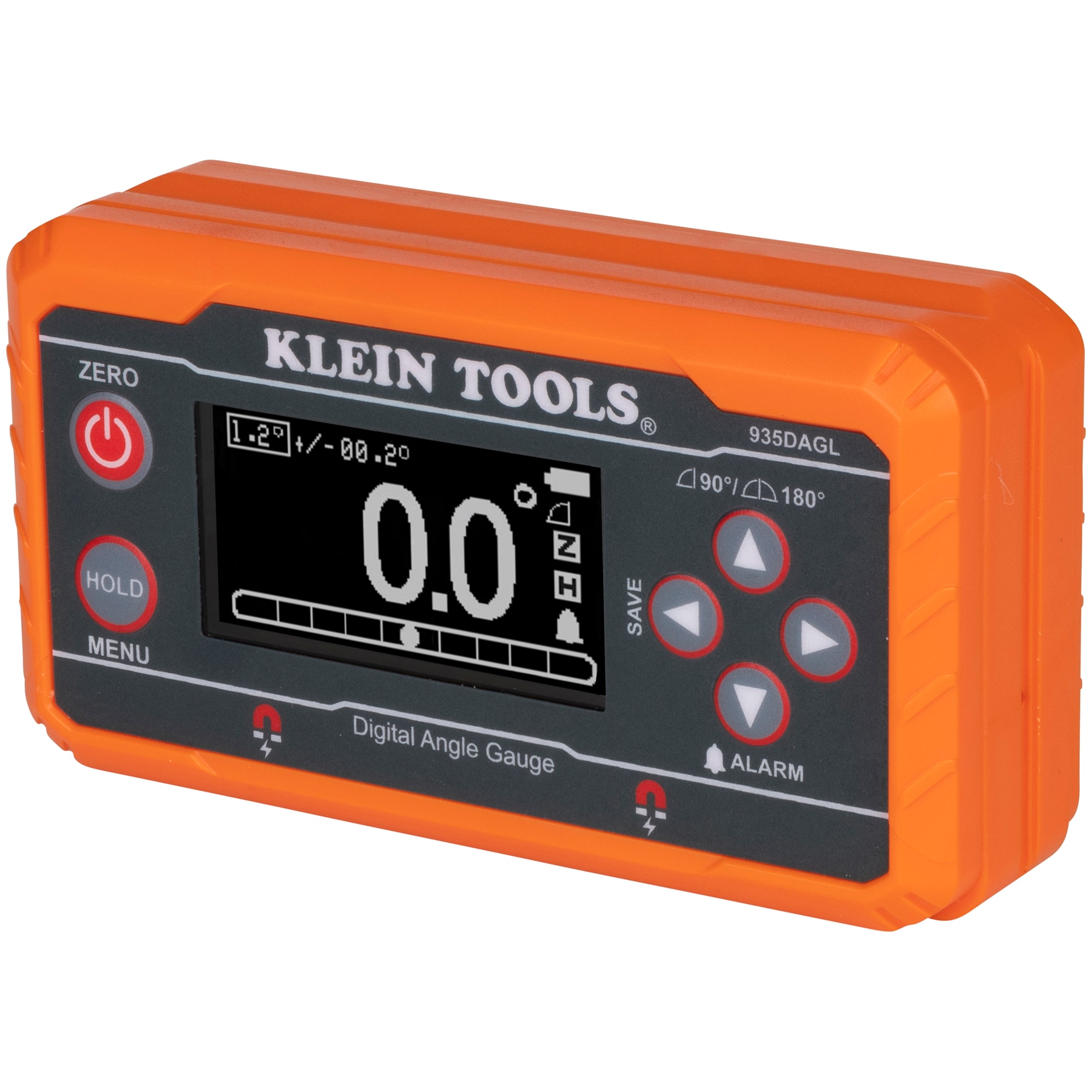
Klein Tools 935DAGL
A programmable magnetic angle finder with numeric ranges, bullseye mode and visual/audible target feedback.
Best for: Repeat bends, pitch, offsets and angle-critical layout.
- 0–90° and 0–180° ranges
- Magnetic base and V-grooves
- Programmable target angles
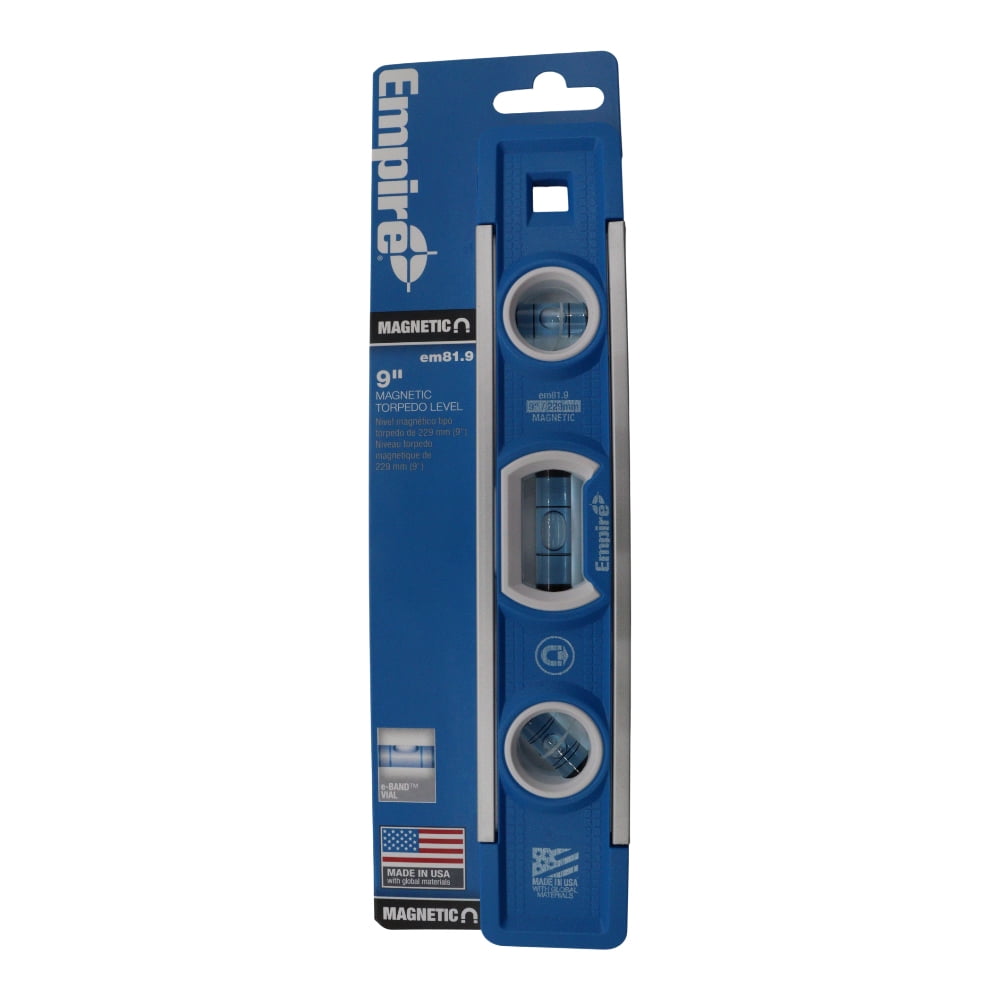
Empire EM81.9G
A conventional 9-inch magnetic aluminum level with three vials, V-groove edge and overhead viewing slot.
Best for: Fast box, panel, fixture and overhead checks.
- Level, plumb and 45° vials
- Magnetic base
- No batteries or display
What Makes a Torpedo Level Good for Electrical Work?
An electrician’s torpedo level has to work where a full box level is awkward: between studs, against a panel, on a short run of conduit, above a fixture or inside a crowded cabinet. Compact size alone is not enough. The frame must resist twisting, the reading has to remain visible from realistic working positions, and the tool should stay in place while both hands manage hardware.
A magnetic edge is most useful on ferrous conduit, boxes, panels and strut. A V-groove helps center the tool on round material. Neither feature removes the need to keep control of the tool—especially overhead—and magnets do not hold to aluminum, copper, PVC or nonferrous stainless alloys.
Electrician Torpedo Level Comparison
Swipe horizontally to compare all specifications →
| Product | Best for | Length / form | Reading system | Magnet / groove | Lighting / digital | Accuracy / rating status | CTA |
|---|---|---|---|---|---|---|---|
| Klein 935RBLT | Everyday + low light | 9-in billet-aluminum torpedo | 3 vials: 0°, 45°, 90° | Rare-earth track / V-groove | LED vial illumination | Numerical accuracy not independently verified; water/impact resistant, no verified IP code | Check Current Listing |
| Klein 935DAGL | Angles, bends and pitch | Compact digital angle level | 0–90°, 0–180°, dual-axis; target angles | Magnetic base / V-grooves | LCD + audible/visual feedback | Numerical accuracy and ingress rating not independently verified | Check Current Listing |
| Empire EM81.9G | Battery-free routine checks | 9-in aluminum torpedo | Level, plumb, 45°; overhead slot | Magnetic base / V-groove | None | Numerical accuracy and water/IP rating not independently verified | Check Current Listing |
Detailed Product Recommendations
Klein Tools 935RBLT: Lighted, Magnetic and Conduit-Ready
The 935RBLT is the most natural all-around recommendation for this article. It keeps the familiar speed of a vial level but adds illumination for dark panels, utility rooms and unfinished spaces. Its billet-aluminum 9-inch frame, rare-earth magnetic track and V-groove support common electrical work on ferrous conduit and metal surfaces.
The indexed listing identifies three lighted vial positions—0°, 45° and 90°. Some secondary pages describe a different vial count, so this article deliberately uses the current indexed title rather than blending conflicting specifications. The product is described as water and impact resistant, but no formal IP code was verified.
Advantages
- Illuminated vials for poor visibility
- Strong magnetic track for hands-free positioning
- Useful size and V-groove for conduit
Considerations
- Light depends on batteries
- Only fixed vial angles; no numeric display
Ideal buyer: an electrician, apprentice or maintenance technician who needs one premium daily level and regularly works in dim spaces.
See the Lighted Torpedo LevelKlein Tools 935DAGL: Numeric Angles and Repeatable Targets
The 935DAGL is not simply a more expensive vial torpedo. It solves a different problem: finding, transferring and repeating angles. Its documented modes cover 0–90°, 0–180° and dual-axis bullseye measurement. Programmable target angles, an auto-rotating reverse-contrast display and audible/color feedback can reduce repeated visual checking.
Product materials also document pitch presets at 1/8, 1/4, 3/8 and 1/2 inch per foot, a magnetic base, V-groove edges, two AA batteries and a soft case. An accessible authoritative numerical accuracy specification was not independently confirmed during this check, so compare the current listing and manual with the tolerance your work requires.
Advantages
- Reads many angles rather than three fixed positions
- Programmable targets help repeated layout
- Magnetic base, V-grooves and pitch presets
Considerations
- Requires batteries and more setup
- Overkill for simple box and fixture checks
Ideal buyer: a professional who regularly lays out bends, offsets, slope or repeated target angles and can turn faster feedback into saved time.
Explore the Digital Angle ToolEmpire EM81.9G: Straightforward Magnetic Reliability
The EM81.9G is the choice for readers who want a durable conventional level without battery management. Its 9-inch aluminum frame carries three essential vials for level, plumb and 45°, a magnetic base, V-groove edge and an overhead viewing slot.
That overhead slot is useful when the level sits above normal eye height on a box, fixture support or short run. It does not offer illumination or live angle numbers, but this simplicity is precisely why it belongs beside the two Klein picks: it is fast, familiar and always ready.
Advantages
- No batteries, app or display
- Overhead viewing slot
- Magnetic base and V-groove edge
Considerations
- No illuminated vials
- No numeric or programmable angles
Ideal buyer: an electrician who wants a dependable, easy-to-read magnetic level for routine boxes, panels, fixtures and short conduit runs.
View the Battery-Free PickKey Features to Compare
Length and frame rigidity
Most electrician torpedo levels fall around 6 to 10 inches. A 9-inch model is a useful compromise: short enough for a pouch and crowded work area, yet long enough to bridge common boxes and provide a stable reading. A rigid aluminum frame resists the twist that can make a vial look trustworthy while the reference surface is no longer true.
Magnet placement and holding strength
Continuous or well-placed rare-earth magnets help a level stay on ferrous conduit, boxes and panels. Test the actual hold on a safe workpiece before relying on it. Paint, curved surfaces, dust, rust and metal thickness can reduce grip. A magnet is a positioning aid, not fall protection.
Vial visibility and viewing angle
Bright fluid, high contrast and large windows matter when the viewing angle is poor. An overhead slot can help with work above eye level. Illumination is useful in dark enclosures, but it adds batteries and controls. The best choice depends on how often lighting—not angle range—is the real obstacle.
Best low-light match: The Klein 935RBLT adds illuminated 0°, 45° and 90° vials without changing the familiar torpedo-level workflow.
See the Lighted LevelV-groove and conduit contact
A V-groove helps locate the frame on round pipe, but it does not guarantee a stable reading on every diameter. Keep the groove clean, confirm full contact and avoid rocking the tool while reading the bubble or display.
Fixed vials versus digital angles
Fixed vials are fastest for level, plumb and a standard 45° reference. Digital tools become valuable when the target lies between those positions, when slope matters or when a crew must repeat the same angle. More features only improve value when they reduce real steps in the job.
Best Level by Electrical Task
Boxes, panels and fixtures
A conventional 9-inch magnetic torpedo is usually enough for setting a metal box, aligning a short panel reference or checking a fixture support. Place the level on a clean, flat reference surface and read it straight on to reduce parallax.
Best simple match: Empire’s overhead viewing slot and battery-free three-vial layout suit fast routine checks.
View Empire EM81.9GEMT, conduit and strut
For ferrous conduit and strut, magnet strength and groove contact can free both hands. Confirm that the tool cannot slide, and keep metal filings away from the magnetic surface. For nonferrous or PVC work, plan to hold or strap the level rather than assuming the magnet will help.
Bends, offsets and planned pitch
A digital angle tool can show incremental angles, repeat a target and provide feedback without forcing the user to interpret a bubble between marks. It complements rather than replaces a standard torpedo.
Best angle-work match: Choose the 935DAGL when numeric angles, pitch presets and programmable targets can prevent repeated setup.
View Digital Angle FeaturesLow-light cabinets and rough-ins
Before buying a digital tool solely for visibility, consider an illuminated vial model. It retains a quick analog reading and can be easier to use when gloves, dirt or awkward body position make display controls inconvenient.
How to Check and Protect Level Accuracy
- Clean the frame, magnetic track and reference surface.
- Place the level on a stable horizontal surface and note the bubble or reading.
- Rotate the tool 180° end-for-end on the same spot. The result should agree.
- Repeat on a vertical surface for plumb, securing the tool safely.
- For a digital model, follow the manufacturer’s calibration procedure and test against a known reference.
- Recheck after a hard drop, heat exposure or any visible frame damage.
Do not assume a premium brand makes inspection unnecessary. A bent frame, debris under the magnetic edge, damaged vial or calibration error can affect any tool. Store the level where the frame and vial windows are protected, remove metal filings from magnets and replace weak batteries before critical work.
How to Choose Without Overbuying
Start with your most frequent task. If most checks are level, plumb and 45°, buy a rigid magnetic vial level. If visibility is a recurring problem, pay for illumination. If your work repeatedly uses nonstandard angles, slope or bend targets, a digital angle tool can justify the extra cost.
Then verify that the frame fits the pouch and the places where you work. Check magnet location, groove geometry, display/viewing orientation, battery type and the manufacturer’s stated operating limits. Published accuracy should be read as a specification to confirm—not as a substitute for field checks.
A higher price is only worthwhile when a feature saves time or prevents mistakes. This is why the shortlist contains three different workflows instead of three nearly identical magnetic torpedoes.
Which Electrician’s Level Is Right for You?
Choose lighted everyday versatility
Pick the Klein 935RBLT for magnetic hands-free positioning, a conduit V-groove and easier vial visibility in dark work areas.
Choose the Lighted Pick →Choose numeric angle control
Pick the Klein 935DAGL when programmable targets, pitch and live angle readings can streamline repeated layout.
Choose the Digital Pick →Choose battery-free simplicity
Pick the Empire EM81.9G for three essential vials, magnetic holding and an overhead viewing slot with no electronics.
Choose the Conventional Pick →Frequently Asked Questions
What size torpedo level is best for electricians?
A 9-inch magnetic torpedo level is the best all-around size for many electricians because it fits a pouch and crowded work area while spanning common boxes and short conduit references. A 6-inch model is more compact, while a longer model may be steadier where space allows.
Do electricians need a magnetic torpedo level?
A magnet is very useful on ferrous conduit, boxes, panels and strut because it can free both hands. It will not help on aluminum, copper, PVC or many nonferrous surfaces, and it should never be treated as fall protection.
Is a digital level better than a vial level?
A digital level is better for numeric angles, pitch and repeatable targets. A vial level is usually faster for ordinary level, plumb and 45-degree checks. Many professionals benefit from a standard magnetic torpedo first and add digital capability when their work justifies it.
What accuracy should an electrician’s level have?
Use the tolerance required by the task and confirm the manufacturer’s current published specification. Regardless of brand, perform a flip test before critical work and recheck the tool after a hard drop or visible damage.
Why is a V-groove useful on a torpedo level?
A V-groove helps center the level on round conduit or pipe and can reduce rocking. The surface and groove still need to be clean, and the tool must have stable contact for a dependable reading.
How do I verify that a torpedo level is still accurate?
Place it on a stable surface, note the reading, rotate it 180 degrees on the same spot and compare the result. Repeat vertically for plumb. For a digital model, also follow the manufacturer’s calibration procedure.
Final Verdict
The Klein Tools 935RBLT is the best overall fit for most electricians in this comparison. Its illuminated vials, rare-earth magnetic track, 9-inch frame and V-groove address everyday visibility and hands-free positioning without forcing every check into a digital workflow.
Check Klein 935RBLT on AmazonAmazon offers, sellers and specifications can change. Confirm the exact model and ASIN before purchase.Electrical layout tools solve different jobs: a level checks alignment, while a detector checks for energized conductors. See our guide to the best non-contact voltage testers for homeowners before working near boxes, fixtures, or conduit.