
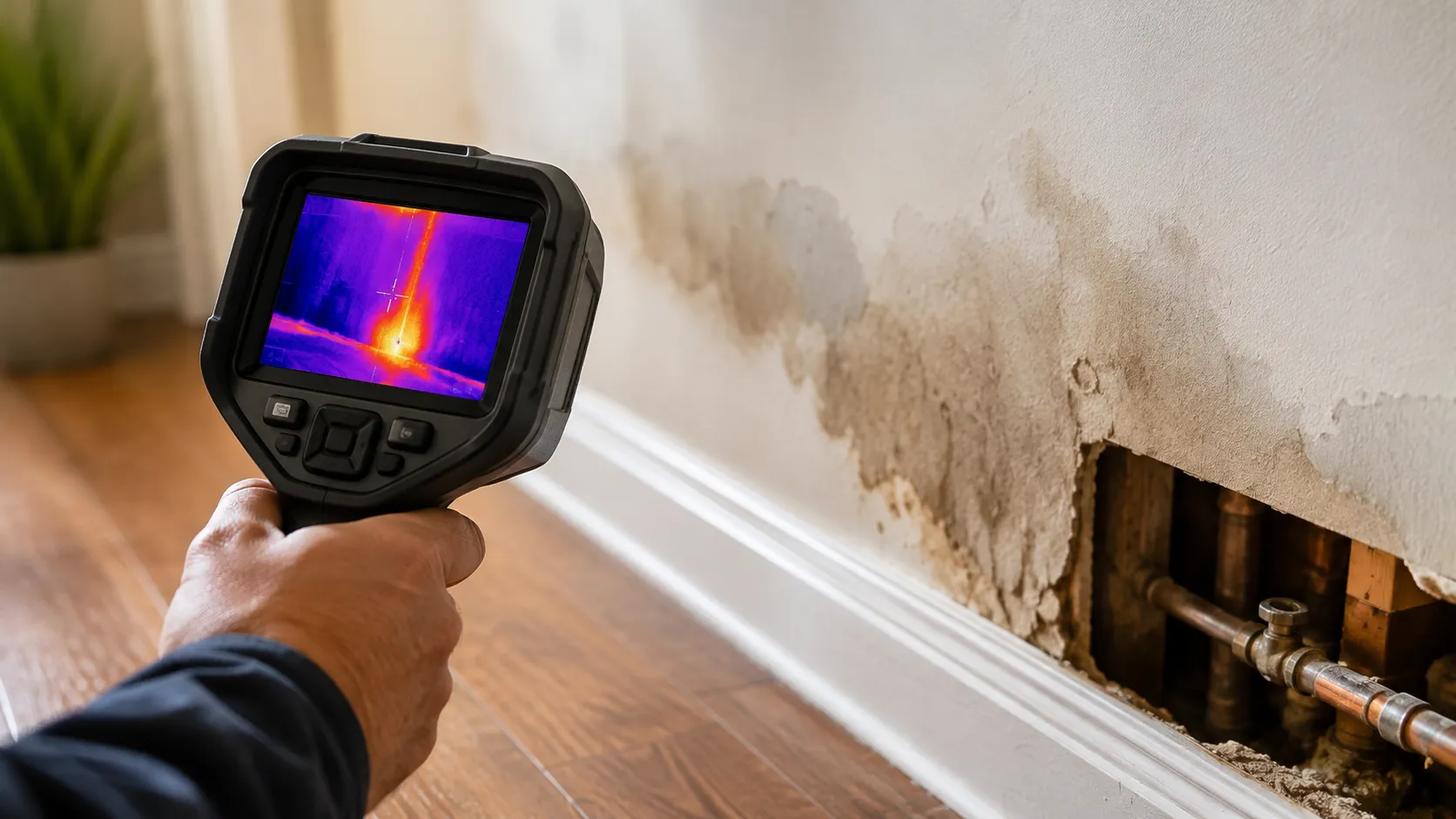
This FLIR C5 review examines whether a pocket thermal camera makes sense for building checks, maintenance and repeat inspection work. Its appeal is straightforward: a standalone instrument that helps you locate surface temperature differences, save the evidence and share useful records without attaching a camera to your phone.
Review approach: This is a specification-based buying review using FLIR documentation checked October 30, 2026. We have not performed hands-on accuracy, battery or durability tests. Buying recommendations are editorial judgments. As an Amazon Associate, we earn from qualifying purchases. Walmart links may also earn us a commission at no additional cost to you.
Quick verdict: most useful for repeated inspection work
Shortlist the C5 if you regularly investigate temperature patterns and need a portable camera with a clear image-recording workflow. For a single household concern, compare renting a suitable camera or hiring an inspector before buying.
Thermal images reveal surface temperature patterns. They do not independently prove a water leak, mold, a hidden object or an electrical fault.
Retailer search links. Matching inventory, seller identity and current Amazon/Walmart prices have not been verified. Check the exact C5 model before comparing offers.
FLIR C5 review: the specifications that matter
The C5 combines a 160 × 120 thermal detector with a separate 5-megapixel visual camera. These are different imaging systems: the 5 MP figure does not describe its thermal resolution. FLIR’s MSX mode overlays visible detail on the thermal image to make the scene easier to recognize.
| Feature | FLIR specification | Buying implication |
|---|---|---|
| Thermal detector | 160 × 120; 19,200 pixels | Judge thermal detail by this figure, separately from the visual camera. |
| Visual camera | 5 MP | Useful context for identifying the inspected scene. |
| Image modes | Infrared, visual, MSX and picture-in-picture | Choose a view that explains the finding clearly. |
| Object temperature range | −20°C to 400°C / −4°F to 752°F | This is the target measurement range, not the allowed ambient range. |
| Image frequency | 8.7 Hz | Consider whether your work involves stationary inspections or moving subjects. |
| Minimum focus distance | Thermal: 0.1 m; MSX: 0.3 m | Close-up tasks need attention to working distance. |
| Power | Built-in rechargeable lithium-ion battery; USB-C; listed operating time 4 hours | Plan charging around a working day; actual runtime can vary. |
| Storage and transfer | Internal storage, Wi-Fi/FLIR Ignite, USB-C | Check your preferred export and reporting workflow before purchase. |
| Protection | IP54; 2 m drop-test specification | Protected does not mean waterproof or immune to damage. |
Source: FLIR C5 official product page. Specifications describe manufacturer claims, not our test results. FLIR lists camera operating temperature separately as −10°C to 50°C.
Read the accuracy conditions carefully
FLIR specifies ±3°C for object temperatures from 0°C to 100°C, and ±3% from 100°C to 400°C, under its stated ambient conditions of 15°C to 35°C and object temperatures above 0°C. Do not extend those figures to every temperature or environment. Temperature range, sensitivity and accuracy describe different things.
For practical buying purposes, decide whether you mainly need to compare patterns or make measurements that must meet a formal requirement. A specification suitable for spotting an unusual area may not satisfy your calibration, reporting or precision requirements.
Who is the FLIR C5 best suited to?
Strong reasons to consider it
- You carry out recurring property or equipment inspections.
- You want a standalone camera rather than a phone accessory.
- You need to organize images and explain findings to clients or colleagues.
- You are willing to learn thermal interpretation and verify suspicious areas.
Reasons to reconsider
- You need it for one isolated DIY concern.
- You expect the camera to see through walls.
- Your work requires finer thermal detail or specifications the C5 does not meet.
- You have no plan for confirming what a temperature pattern means.
The strongest case for buying is repeated use with a specific workflow. Write down your three most common inspection tasks, the size of the targets and the distance from which you can safely observe them. Then ask whether the C5’s resolution, focus limits and documentation tools fit those tasks.
What MSX adds—and what it cannot add
MSX embeds visible scene detail into the thermal presentation. That can make it easier to recognize an outlet, cabinet edge or pipe route in a saved image. FLIR also lists visual, infrared and picture-in-picture modes, so the camera offers more than one way to document a scene.
Visible outlines do not create extra native thermal pixels. If a purchase decision depends on seeing small temperature differences on a tiny component, compare actual thermal specifications and suitable demonstrations. A sharper-looking composite image alone is insufficient evidence of better thermal measurement.
Can it find water leaks, missing insulation or electrical problems?
Water-leak investigation
A thermal camera can help identify an area whose surface temperature differs from its surroundings. Moisture may contribute to that pattern, but airflow, construction materials and other conditions can also change surface temperature. Confirm the cause with inspection and appropriate moisture measurements before treating the image as evidence of a leak.
Read our guide to thermal cameras and water leaks for the distinction between finding a clue and confirming water intrusion. A normal-looking image also does not prove that an assembly is dry.
Building-envelope checks
Use thermal images as part of a planned inspection. Record indoor and outdoor conditions and note recent sun exposure or heating changes. These details help explain why a surface looked different at the time of the visit. Compare similar areas under similar conditions and investigate the reason for an anomaly before recommending repairs.
Electrical inspections
Unexpected heating can be a useful observation, but a camera cannot establish that equipment is safe to touch or work on. Opening energized equipment and electrical diagnosis belong to qualified personnel following the applicable safety procedures. Do not remove covers or approach exposed live parts just to obtain an image.
Reporting and ownership: look beyond the camera
FLIR lists internal image storage, USB transfer and FLIR Ignite cloud connectivity. It specifies standard JPEG files containing 14-bit measurement data. For a buyer, the useful question is whether those files fit the way you actually prepare reports, keep records and share information.
Check your workflow before buying
- Confirm how to export original images and preserve measurement data.
- Check current Ignite account terms, storage allowances and any optional software costs.
- Decide whether client or workplace policies permit cloud storage.
- Set up a naming system for room, asset, date and viewing position.
- Keep a visible scene photograph and inspection notes alongside the thermal finding.
Do not assume every reporting feature or future cloud allowance is included indefinitely. Check the current service details and the software you plan to use. A camera that fits your field work can still be awkward if its export process does not fit your reporting routine.
Standalone thermal camera vs phone attachment
| Buying question | C5-style standalone camera | Phone attachment |
|---|---|---|
| Phone dependency | Captures images without using your phone as its screen. | Check connector, phone compatibility and app support. |
| Power and charging | A separate built-in battery to maintain. | Power arrangements vary by model. |
| Image quality | Compare the C5’s actual thermal specifications. | Compare the exact attachment; format alone does not determine quality. |
| Value | Most compelling when portability and repeated documentation matter. | May suit occasional use if its specifications and compatibility meet your needs. |
This is a format comparison, not a tested ranking. A standalone camera is not automatically better than every phone attachment. Compare thermal resolution, focus distance, temperature accuracy, support and complete ownership cost for the exact alternatives.
Amazon vs Walmart: compare equivalent FLIR C5 offers
We are not naming a live price winner. The buttons open searches, which may include another camera, an accessory, a used unit or a marketplace listing. Confirm the product itself before comparing the number beside it.
Five checks for a fair comparison
- Exact model: verify FLIR C5 and the model details shown on the listing.
- Condition: compare new with new; evaluate refurbished or used offers separately.
- Seller and warranty: confirm who supplies the camera and whether regional support applies.
- Included items: check cables, protective storage, documentation and any advertised bundle.
- Checkout total: include shipping, tax, return costs and any restocking conditions.
A lower listing price is less attractive if the seller, condition or return terms do not fit your needs. Save the listing details when you order and inspect the received model and accessories while the return window is open.
Compare the right camera and complete offer
If the C5 fits your inspection work, review matching listings at both retailers. Choose the seller, condition and support terms before deciding on the final price.
Affiliate search links. We do not guarantee current stock or a matching offer at either retailer.
Getting useful results from the first week
Begin with the official instructions and familiar, accessible surfaces. Learn the image modes, file handling and measurement settings before relying on the camera for an important assessment. Thermal interpretation takes context; a colorful image is only the start of an inspection.
Reflective materials deserve particular care because the displayed pattern can include reflected radiation. Emissivity and reflected apparent temperature settings affect measurement interpretation. If a reading matters to a repair or safety decision, verify it with a suitable independent method and qualified advice where needed.
Keep observation separate from diagnosis in your notes. “This area appeared cooler than the adjacent wall under these conditions” records what you saw. “There is definitely a leak inside this wall” requires additional evidence. That distinction makes your records more useful to the person planning the next step.
Frequently asked questions
Is the FLIR C5 worth it for homeowners?
It can be if you have recurring inspection needs and will learn to interpret the images. For a single project, compare renting a camera or hiring an inspector against buying and maintaining one.
Does the C5 see through walls?
No. It observes infrared radiation from surfaces in its view. A surface temperature pattern may suggest an issue, but it does not show a direct picture of objects inside a wall.
Is the C5 a 5-megapixel thermal camera?
No. FLIR lists a 160 × 120 thermal detector and a separate 5 MP visual camera. MSX uses visible detail to aid recognition; it does not change native thermal resolution.
Is it waterproof?
FLIR lists IP54 protection for the housing and lens. Do not treat that rating as permission to immerse the camera.
How long does the battery last?
FLIR lists four hours of operating time. Treat this as a manufacturer specification; your settings, conditions and battery condition can affect actual runtime.
Which store has the best FLIR C5 price?
No current Amazon/Walmart price winner has been verified here. Compare the exact model, seller, condition, warranty eligibility and checkout total using the search links.
Our buying recommendation
The FLIR C5 deserves a place on your shortlist when a pocket camera, standalone operation and repeatable image documentation solve a regular work problem. The documented feature set is more compelling for a recurring inspection routine than for a one-time curiosity purchase.
Before paying, check whether its thermal detail and measurement conditions meet your actual requirements. Budget for interpretation, verification and reporting as well as hardware. If those pieces fit, compare complete offers; if they do not, choose a different tool or inspection service.
Source and editorial policy: Specifications and product-feature descriptions are based on the official FLIR C5 page, checked October 30, 2026. Recommendations are our analysis of that documentation, not hands-on test findings. The featured image is an existing general thermal-inspection illustration from AccurateGoods; it is not a verified photograph of the C5 or evidence of product testing.
