
Craftsman 4-in-1 Laser Trac Level Review: Is It Still Worth Buying?
The Craftsman 4-in-1 Laser Trac Level was a clever DIY layout tool, but it is now mainly found used. Here is what it actually does, what to inspect before buying, and which modern laser levels offer better value.
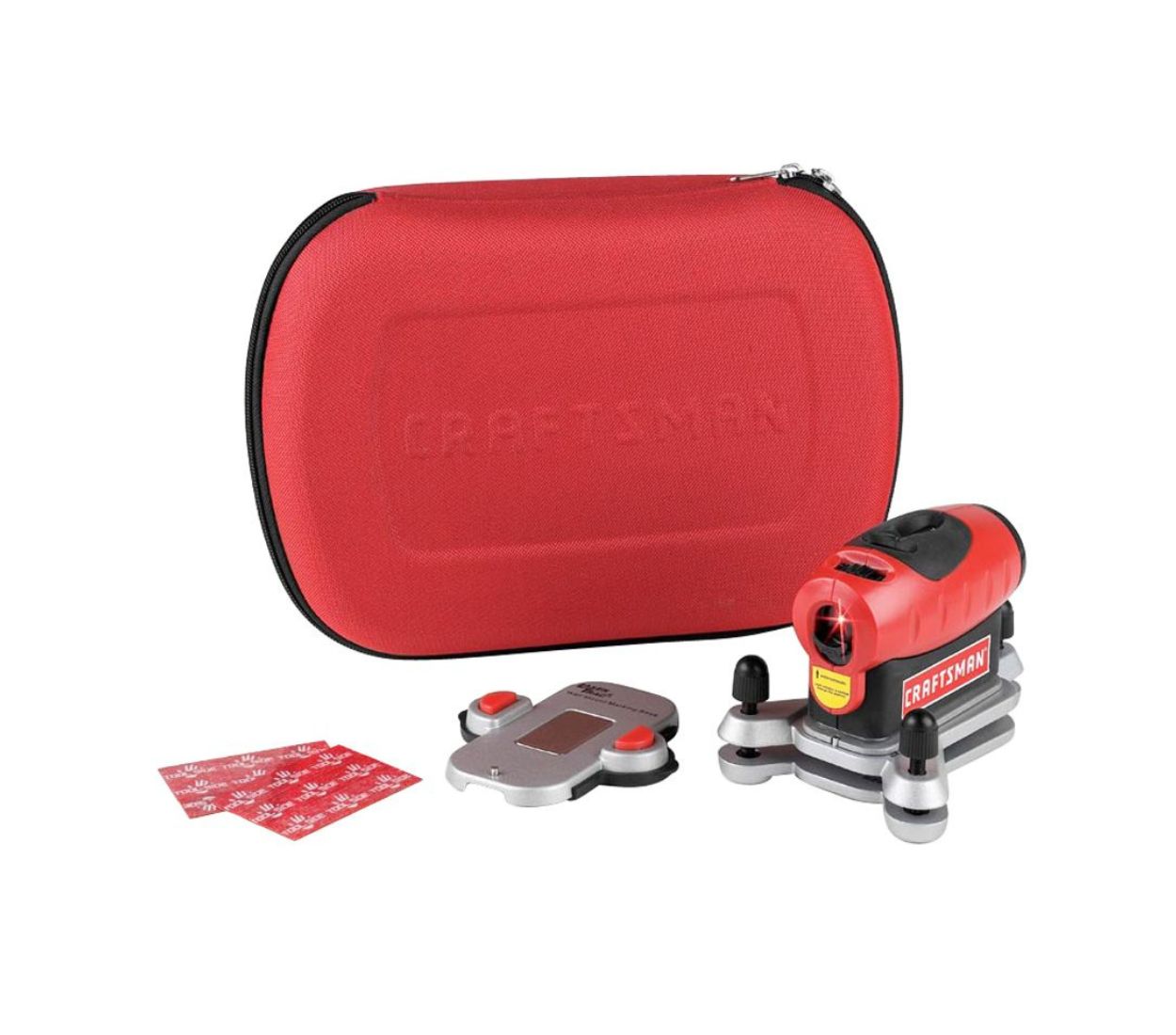
See Our Best Modern Alternative Prices and availability can change. Check the Amazon listing for current details.If you searched for the Craftsman 4-in-1 Laser Trac Level, you may be looking at model 320.48251/948251 or a closely related Laser Trac kit. These older red-line tools are often sold secondhand with a wall-mount base, precision leveling base, tripod-style base, protective glasses, manual, and carrying case.
The original article about this tool mixed together several unrelated Craftsman products. To make this review useful, we checked the model 320.48251 manual and separated the legacy Laser Trac tool from today’s self-leveling cross-line lasers.
Buy it only if you find a low-cost, tested unit with the important bases and accessories included. It remains useful for hanging pictures and basic indoor alignment, but a modern green self-leveling laser is faster, brighter, easier to mount, and usually the smarter purchase.
Legacy/discontinued modelWho Should Buy It—and Who Should Skip It?
Buy it if you:
- Found a complete, tested kit at a genuinely low price.
- Mainly hang pictures, shelves, trim, or fixtures indoors.
- Do not mind manually centering bubble vials.
- Enjoy keeping or using older Craftsman tools.
Skip it if you:
- Need fast automatic leveling or long working range.
- Work in bright rooms or outdoors.
- Need dependable replacement parts or warranty support.
- Plan to install tile, cabinets, framing, or ceilings regularly.
What the Craftsman 4-in-1 Laser Trac Level Actually Does
The Laser Trac is a manually leveled red-line projection tool. Its beam can rotate from horizontal to vertical, while built-in vials help you align the body before marking a line. The model 320.48251 manual describes several ways to position the level, which is where the “4-in-1” idea comes from.
- Handheld or flat-surface use: useful for short reference lines and basic alignment.
- Wall-mounted use: the thin-pin base can attach to soft wood or wallboard and pivot around an alignment point.
- Precision-base use: adjustment knobs help manually center the bubble vials before projecting a horizontal or vertical line.
- Tripod/base use: compatible kit pieces can raise and stabilize the tool for wider layout jobs.
According to the manual, the precision-base setup was intended for jobs such as aligning windows, track lighting, and cabinets. The stated line accuracy with that setup is approximately ±3/8 inch at 30 feet. That can be adequate for occasional household layout, but it trails many current self-leveling lasers.
Performance in Real DIY Projects
Picture hanging and wall décor
This is the Laser Trac’s strongest use case. With a complete thin-pin wall base, you can align the beam to reference points and keep both hands free for marking. It works well for a row of frames, hooks, or bathroom fixtures on drywall. The downside is that the pins make small holes and must be handled carefully.
Shelves and cabinets
The projected line is more convenient than repeatedly moving a short spirit level, but setup takes patience. You must center the bubble vials and recheck the base if it gets bumped. For cabinet runs or floating shelves, a self-leveling green cross-line laser is faster and easier to verify.
Flooring and tile
We would not buy this legacy model specifically for flooring or tile. It lacks the automatic leveling, beam visibility, mounting flexibility, and plane coverage that make modern laser levels efficient on larger projects. A 360-degree model is a much better fit for room-wide reference lines.
Bright rooms and outdoor use
The red beam is easiest to see in controlled indoor light. Bright ambient light can wash it out; the original troubleshooting guidance suggests fresh batteries and laser-enhancing glasses when the line is difficult to see. For daylight or longer indoor distances, choose a brighter green laser and confirm whether it supports a receiver.
Pros
- Useful for basic picture and fixture alignment.
- Rotating line supports horizontal and vertical layouts.
- Multiple mounting options in a complete kit.
- Compact and simple once properly leveled.
- Often inexpensive on the used market.
Cons
- Discontinued and commonly sold incomplete.
- Manual leveling takes more time.
- Red line is weak in bright conditions.
- No modern 360-degree room coverage.
- Age, corrosion, and alignment damage are real risks.
Best Craftsman Laser Trac Alternatives
For most buyers, a current self-leveling model is a better investment. These three options cover simple household jobs, all-around DIY work, and larger renovation projects.
PREXISO Multi-Surface Laser Level
A familiar wall-mount concept for frames, décor, and short indoor lines.
- 30-foot red-line projection
- Horizontal and vertical lines
- Wall base with pins or adhesive strips
- Built-in illuminated vials
Motovera 100-Foot Green Laser
A practical upgrade for shelves, tile, pictures, and general home renovation.
- Bright green cross line
- Self-leveling and manual modes
- Tripod included
- Brightness settings and pulse mode
Huepar 3×360° Green Laser
Designed for room-wide layout work where full horizontal and vertical planes save time.
- Three 360-degree green planes
- Rechargeable power
- Magnetic mounting bracket
- Hard carrying case
| Model | Leveling | Beam / coverage | Best for | Verdict |
|---|---|---|---|---|
| Craftsman 4-in-1 Laser Trac | Manual | Rotating red line | Occasional wall alignment | Buy used only if complete |
| PREXISO Multi-Surface | Manual vials | 30-ft red lines | Frames and décor | Closest simple alternative |
| Motovera 100-Foot | Self-leveling | Green cross line | Most household projects | Best overall value |
| Huepar 3×360° | Self-leveling | Three green 360° planes | Renovation and room layout | Best premium upgrade |
How to Buy a Used Laser Trac Without Regret
How to Use the Craftsman Laser Trac Level
- Install fresh batteries with the correct polarity and inspect the contacts for corrosion.
- Choose the appropriate base for handheld, wall-mounted, or flat-surface work.
- Position the tool and center the built-in bubble vial for the line you want to project.
- Turn on the laser while keeping the beam away from all eyes.
- Rotate or align the projected line with your measured reference point.
- Recheck the vial after every adjustment or accidental bump.
- Mark the work surface, then switch the laser off before moving the base.
Troubleshooting Common Problems
The laser line is weak or difficult to see
Start with fresh matching batteries, clean the output window with a soft dry cloth, and reduce ambient light. Laser-enhancing glasses may improve visibility, but they do not make the beam safe to look into.
The laser does not turn on
Verify battery orientation and clean light corrosion from the contacts only when the batteries are removed. If leakage has badly damaged the compartment or wiring, replacement is normally more practical than repair.
The projected line is not level
Recenter the bubble vial, check the thumb knob, and verify that the precision base has not moved. If the tool consistently misses the same reference points after careful setup, it may have been dropped or knocked out of alignment.
Can it be calibrated?
This is not a modern push-button self-calibration system. You manually level the setup with the vials and base adjustments. Internal laser repairs or alignment work should not be attempted by an unqualified user.
Frequently Asked Questions
Is the Craftsman 4-in-1 Laser Trac Level self-leveling?
No. The legacy 320.48251-style Laser Trac is manually leveled with bubble vials and adjustment controls. Do not confuse it with newer Craftsman self-leveling cross-line models.
What are the four functions?
The exact kit can vary, but “4-in-1” refers to its multiple positioning and line-layout uses, including handheld or flat-surface use, wall mounting, precision-base setup, and tripod/base-supported setup—not sawing, drilling, sanding, or polishing.
Is it good for hanging pictures?
Yes. A complete working kit is useful for aligning several frames or fixtures, especially when the thin-pin wall base is included. A newer self-leveling model is still faster to set up.
Can I use it for flooring or tile?
It can create a reference line, but it is not our preferred choice. A modern green self-leveling or 360-degree laser offers better visibility, faster setup, and more useful room coverage.
Which batteries does it use?
Battery requirements can differ among Laser Trac models, so confirm the model label and follow its matching manual instead of relying on a generic online answer.
Is the original Craftsman Laser Trac still available new?
It is mainly a used or old-stock product today. Availability and condition vary. Current laser levels are easier to find and generally provide better features for the money.
Final Verdict
The Craftsman 4-in-1 Laser Trac Level is still a handy low-cost tool for simple indoor alignment—but only when the used kit is complete, accurate, and clean. For most buyers, the brighter beam, automatic leveling, easier mounting, and new-product support of a modern green laser make it the better long-term purchase.
Check Our Best Overall Pick on Amazon Amazon price and availability are subject to change.Research note: Legacy operating details were checked against the Craftsman 320.48251 owner’s manual. Current alternative features were checked against their product listings at the time of this update.
