
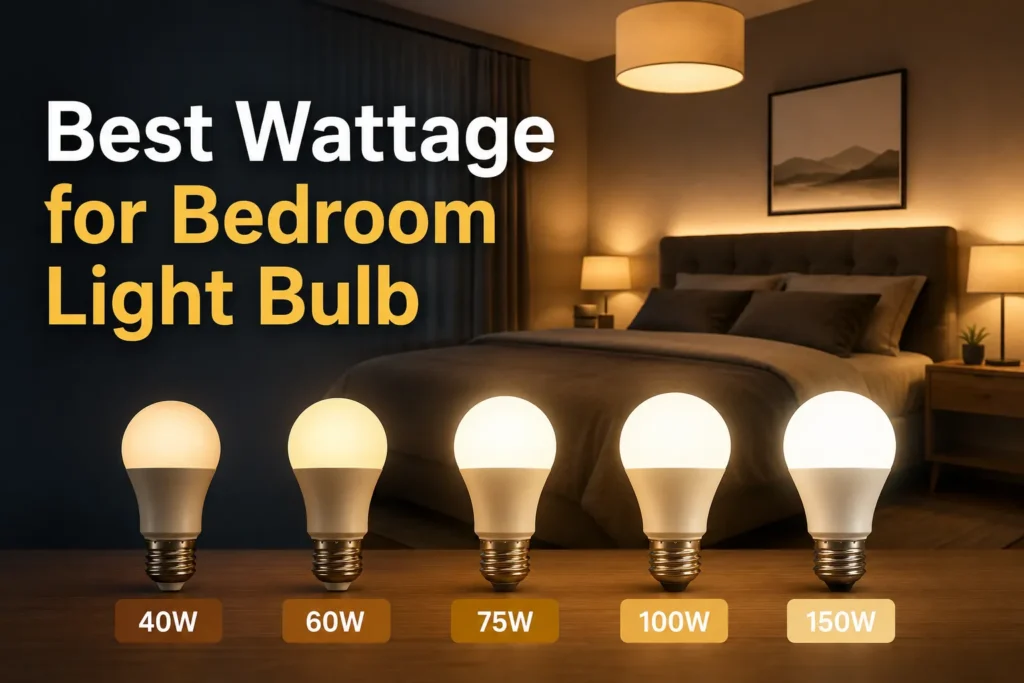
Best Wattage for Bedroom Light Bulb Guide for 2026
Picking the best wattage for bedroom light bulb sounds simple at first. Just buy a bulb and screw it in, right? But once you stand in the aisle or scroll through product pages, it gets messy fast. You see 40W, 60W, 9W, 12W, 800 lumens, 1600 lumens, soft white, daylight, dimmable, non-dimmable. It is a lot for something you use every night.
The truth is, your bedroom light does more than help you see. It affects how relaxed you feel, how easy it is to read, and even how ready your brain is for sleep. That is why the best wattage for bedroom light bulb is not just about brightness. It is about comfort, mood, and efficiency too.
In this guide, I will keep it simple. You will learn what wattage works best, how LED bulbs changed the game, and how to choose the right bulb for your bedroom setup in 2026. If you want a room that feels calm at night and useful during the day, this is the guide to read.
- Point 1: The best wattage for bedroom light bulb depends on room size, lamp type, and how you use the space.
- Point 2: For most bedrooms, LED bulbs in the 5W to 15W range give enough light without feeling harsh.
- Point 3: Focus on lumens, not just watts, because watts measure power use while lumens measure brightness.
- Point 4: Warm white light, usually 2700K to 3000K, is best for a calm bedroom feel and better evening comfort.
- Point 5: Dimmable bulbs are a smart choice because they let you switch from bright task light to soft night light.
- Point 6: Older incandescent bulbs often use 40W to 60W, but modern LEDs give the same glow with far less energy.
- Point 7: The best setup balances brightness, sleep quality, and energy savings, not just maximum light output.
3 Premium Lighting Upgrades Worth Considering
If you want more control than a basic LED bulb provides, these three upgrades add dimming, smart control, and better layered lighting. Start with the Philips Hue Starter Kit if your main goal is replacing bedroom bulbs.
Philips Hue White & Color Ambiance 75W Smart Light Starter Kit
A strong match for readers who want to replace standard bedroom bulbs with a premium smart-lighting system. The kit includes a Hue Bridge and four 75W-equivalent A19 E26 smart bulbs, giving you dimming, white-light tuning, colors, app control, and voice control.
- 4 × 75W-equivalent A19 E26 smart bulbs
- Hue Bridge included
- Dimmable white + color ambiance
- Excellent fit for ceiling and bedside fixtures
Why it is here: Place first because it matches the article’s light-bulb intent most closely.
📑 Table of Contents
- What Wattage Really Means in a Bedroom
- Best Wattage for Bedroom Light Bulb by Bulb Type
- How Bright Should a Bedroom Light Be?
- Best Color Temperature for Bedroom Lighting
- How to Choose the Right Bulb for Your Use Case
- Buying Tips for 2026: What to Look For
- Best Wattage Recommendations by Bedroom Setup
- Conclusion: The Best Wattage for Bedroom Light Bulb in 2026
What Wattage Really Means in a Bedroom
Wattage is power, not brightness
One of the biggest mistakes people make is treating wattage like brightness. That used to work with old incandescent bulbs, where higher wattage usually meant more light. But modern bulbs are different. Today, the best wattage for bedroom light bulb depends on bulb type, especially if you are using LED.
Wattage tells you how much energy a bulb uses. Brightness is measured in lumens. That means a 10W LED bulb can be just as bright as a 60W incandescent bulb. So if you only shop by watts, you may end up with a bulb that is too dim or too bright.
Why this matters in real life
Bedrooms need flexible light. You may want soft light for winding down, but brighter light for cleaning, getting dressed, or reading. That is why many people now choose dimmable LEDs. They get the best wattage for bedroom light bulb and also the right mood at the right time.
If you are also upgrading other parts of the home, practical measuring and inspection tools can help with a room refresh. For example, see our guides to the best self-leveling laser levels and best electronic stud finders.
Best Wattage for Bedroom Light Bulb by Bulb Type
LED bulbs: the best choice for most bedrooms
For 2026, LED is the clear winner. The best wattage for bedroom light bulb in LED form is usually between 5W and 15W, depending on the size of the room and how bright you want it. Most bedrooms do well with a bulb that gives around 450 to 1600 lumens.
Here is a simple way to think about it:
- 5W to 7W LED: good for soft bedside lamps or very small rooms
- 8W to 10W LED: great for average bedside use and gentle room light
- 11W to 15W LED: better for larger bedrooms or brighter ceiling fixtures
LED bulbs also run cooler and last much longer than old bulbs. That makes them a smart pick if you leave the light on often.
Incandescent bulbs: old but still familiar
Some people still prefer incandescent bulbs because of the warm glow. If that is you, the best wattage for bedroom light bulb is often 40W to 60W for a standard room. A 40W bulb gives softer light, while a 60W bulb feels brighter and more general-purpose.
That said, incandescent bulbs use more power and do not last as long. If you want the same cozy feel with less energy, modern LED bulbs are usually the better answer. If you want to compare classic options, you can look at a 40 watt incandescent light bulbs guide or a clear 60 watt light bulbs brighten your home with energy efficient options article for more context.
Smart bulbs and dimmable bulbs
Smart bulbs often list wattage in a different way because they are built around LED tech. The best wattage for bedroom light bulb in smart form is usually similar to regular LED bulbs, but the big win is control. You can dim them, schedule them, or change color temperature.
That is perfect for bedrooms. Bright white in the morning. Soft warm light at night. No need to swap bulbs or use different lamps.
How Bright Should a Bedroom Light Be?
Look at lumens, not just watts
If you want the best wattage for bedroom light bulb, you also need the right lumen level. Lumens tell you how much light the bulb gives off. For a bedroom, most people like a range of 400 to 1600 lumens, depending on how the room is used.
Here is a simple guide:
- 400 to 800 lumens: soft, relaxing light for bedside lamps
- 800 to 1200 lumens: good for general bedroom lighting
- 1200 to 1600 lumens: useful for larger rooms or task-heavy spaces
If your bedroom is small, too much brightness can feel harsh. If it is large or has dark walls, too little brightness can make the room feel dull. The best wattage for bedroom light bulb should match the room, not just the package label.
Room size changes the answer
A small bedroom may only need one soft LED bulb in a lamp and one ceiling fixture. A bigger room may need more total light or a stronger bulb. Ceiling height, wall color, and shade material also matter. A white shade spreads light better. A dark shade blocks more of it.
If you are replacing light in a room with decorative fixtures, a bulb with the right brightness matters even more. For example, some home styles use softer accent lighting, like a modern wood pendant light, where a lower wattage bulb can help keep the look warm and calm.
Best Color Temperature for Bedroom Lighting
Warm light is usually the best fit
The best wattage for bedroom light bulb is only part of the story. Color temperature matters just as much. For bedrooms, warm white light is usually best. That means 2700K to 3000K.
This range feels soft and cozy. It is easier on the eyes at night and works well with sleep routines. Cool white or daylight bulbs can feel too sharp in a bedroom, especially before bed.
When a brighter tone makes sense
There are times when a cooler bulb can help. If you use your bedroom as a work area, makeup area, or dressing space, a slightly cooler light can make colors look more true. But for most people, the best wattage for bedroom light bulb paired with warm white color gives the best all-around result.
Think of it this way: brightness helps you see. Color temperature helps you feel. A bedroom should feel calm first.
Philips Hue Signe Gradient Floor Lamp
For readers who want more than a bulb swap, the Signe adds premium layered bedroom lighting. It produces white and colored gradient light, supports dimming, and is designed for spaces including bedrooms.
- Premium floor-lighting upgrade
- White + multicolor gradient lighting
- App and voice control
- Great for layered bedroom ambience
Why it is here: Place after the color-temperature section, where ambience and warm evening light are already being discussed.
How to Choose the Right Bulb for Your Use Case
For reading in bed
If you read at night, the best wattage for bedroom light bulb is usually around 8W to 10W LED in a bedside lamp. That gives enough light for pages without blasting the whole room. A focused lamp with a warm bulb is ideal.
For winding down before sleep
For relaxing, go lower. A 5W to 7W LED bulb can create a soft glow that helps your brain slow down. Dimming is even better. If the bulb is too bright, the room may feel active instead of restful.
For general room lighting
If your bedroom ceiling light is the main source, the best wattage for bedroom light bulb is often 9W to 15W LED. That gives enough light for dressing, cleaning, and daily use without feeling like office lighting.
For kids’ rooms
Kids’ bedrooms often need a mix of soft and useful light. A dimmable LED is a great pick. You can keep it low at night and brighter during play or cleanup. Safety also matters, so cooler-running LED bulbs are better than hot incandescent bulbs.
If your home has other rooms to upgrade too, lighting is just one part of a smart setup. You may also want to check practical home gear like a best tool set for homeowners for fast swaps and installs.
Buying Tips for 2026: What to Look For
Choose LED first
If you are shopping in 2026, LED should be your first choice. It is efficient, long lasting, and available in many styles. The best wattage for bedroom light bulb in LED form is usually low wattage with the right lumen output. That gives you the light you need without wasting energy.
Pick dimmable if possible
Dimmable bulbs give you more control. That is a big advantage in bedrooms. You can lower the light at night and raise it when needed. Just make sure your lamp or switch supports dimming. Not all bulbs work with all dimmers.
Check the bulb shape and base
Wattage is not the only thing that matters. You also need the right shape. A standard A19 bulb works in many lamps. A smaller candelabra bulb may be needed for decorative fixtures. The wrong shape can change how the light spreads in the room.
Watch for flicker and glare
Cheap bulbs can flicker or feel harsh. In a bedroom, that is a problem. A good bulb should give steady light and a soft finish. Look for bulbs labeled flicker-free or eye comfort if you are sensitive to light.
Match the bulb to the fixture
Some fixtures need lower heat output or lower brightness because they are enclosed. Others can handle stronger bulbs. Always check the fixture rating. Even if you find the best wattage for bedroom light bulb, it still needs to fit the fixture safely.
Govee Floor Lamp Pro
A feature-heavy floor lamp for readers interested in smart mood lighting. It combines high-output white light, RGB lighting, app/voice features, a built-in speaker, and white-noise functions.
- Up to 2100 lumens
- Adjustable white light + RGB effects
- Built-in Bluetooth speaker
- White-noise and smart-scene features
Why it is here: Place late in the article as an alternative upgrade before the final wattage recommendations.
Best Wattage Recommendations by Bedroom Setup
Small bedroom
For a small bedroom, start with 5W to 8W LED bulbs. That is usually enough for soft, even lighting. If the room has a ceiling fixture and a bedside lamp, you may not need much more.
Average bedroom
For a standard bedroom, 8W to 12W LED is often the sweet spot. This range gives a good mix of comfort and function. It is one of the most common answers when people ask for the best wattage for bedroom light bulb.
Large bedroom
For a larger room, go with 12W to 15W LED or use more than one light source. A single bulb may not be enough. In that case, layered lighting works best. Use one main light, plus bedside lamps or accent lights.
Bedroom with dark walls
Dark paint absorbs light, so you may need a bit more brightness. Try moving up one step in wattage or lumen output. A 10W bulb may feel perfect in a bright white room but too weak in a dark room.
Which Premium Bedroom Lighting Upgrade Should You Choose?
| Product | Best For | Type | ASIN | Amazon |
|---|---|---|---|---|
| Philips Hue 75W Starter Kit | Replacing bedroom bulbs | Smart bulb kit | B09BSHFLD9 | Check price |
| Philips Hue Signe Gradient | Premium ambience | Floor lamp | B09BDLV9BV | Check price |
| Govee Floor Lamp Pro | Features + mood lighting | Floor lamp | B0C7KZPP2B | Check price |
Conclusion: The Best Wattage for Bedroom Light Bulb in 2026
The best wattage for bedroom light bulb is not one fixed number. For most people in 2026, the best choice is a warm LED bulb in the 5W to 15W range, with the exact pick based on room size and use. If you want a soft bedside glow, stay lower. If you need a main room light, move higher.
My simple recommendation is this: choose a dimmable LED bulb, aim for 2700K to 3000K, and use lumens to guide brightness. That gives you a bedroom that feels calm, useful, and energy smart. If you still love the look of old-school bulbs, a 40W or 60W incandescent-style bulb can work, but LED is the better long-term choice.
In short, the best wattage for bedroom light bulb is the one that helps you relax at night and still gives you enough light when you need it. That balance is what makes a bedroom feel right.
Frequently Asked Questions
For most bedrooms, the best wattage for bedroom light bulb is 5W to 15W if you are using LED. This usually gives enough light without making the room feel too bright or too cold.
Not always. A 60W incandescent bulb can work in a bedroom, but it may feel bright in a small space. With LED, you can get the same brightness using much less wattage.
Warm white light in the 2700K to 3000K range is usually best. It feels calm and cozy, which makes it better for relaxing before sleep.
Yes, dimmable bulbs are a great choice for bedrooms. They let you switch from bright task lighting to soft evening lighting with one bulb.
Most bedrooms do well with 400 to 1600 lumens, depending on room size and how you use the light. Bedside lamps usually need less than ceiling fixtures.
Yes, LED is usually better. It uses less energy, lasts longer, and stays cooler while still giving you the right brightness for a bedroom.