Quick Answer
The SUHU charger cannot currently be verified well enough for an unconditional recommendation
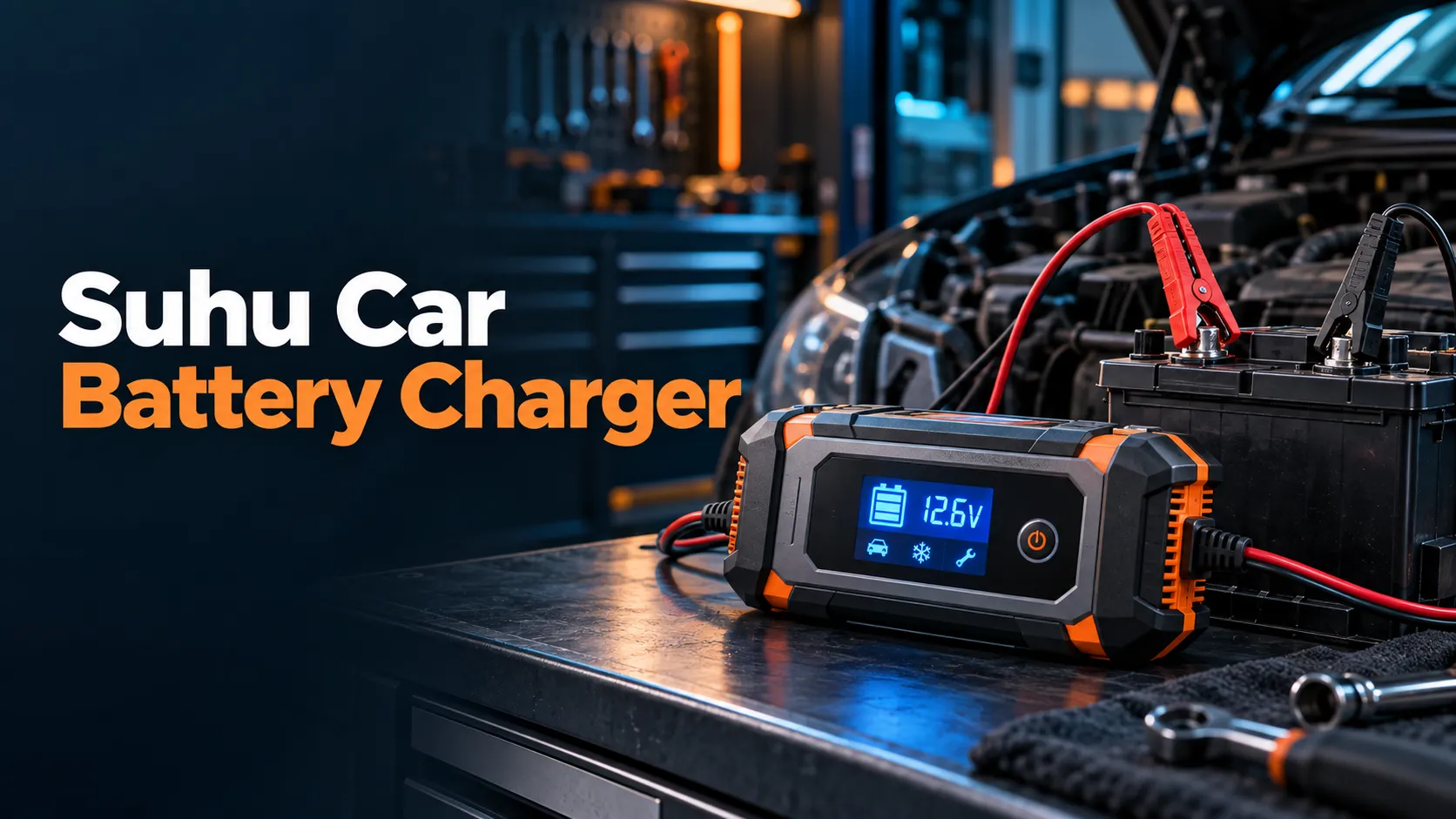
The existing article describes a SUHU automatic battery charger, but an exact current Amazon listing, ASIN and model-specific manufacturer manual could not be independently confirmed. That means current price, warranty, error codes, supported battery chemistries and charging modes should not be treated as verified.
If the label and manual supplied with your unit match your battery, it may still function as an automatic charger. For a new purchase, however, the documented alternatives below make it easier to verify voltage, chemistry, output and operating limits before connecting a vehicle battery.
Disclosure: As an Amazon Associate, AccurateGoods may earn from qualifying purchases at no additional cost to you. Specifications and availability may change; verify the current listing and manufacturer manual before purchase.
Top Verified Battery Charger Alternatives

NOCO GENIUS10
A versatile 10A automatic charger and maintainer for common 6V/12V lead-acid batteries and listed 12V LiFePO4 applications.
Best for: One capable charger for several vehicle and battery types.
Price and availability may change on Amazon.

CTEK MXS 5.0
A documented 4.3A, eight-step 12V lead-acid charger with AGM, reconditioning and long-term maintenance programs.
Best for: Seasonal cars, stored vehicles and 12V lead-acid maintenance.
Price and availability may change on Amazon.

Schumacher SC1281
A multi-function garage unit with charge/maintain, boost, battery and alternator testing, and 100A corded engine start.
Best for: A home garage that needs diagnosis and starting assistance.
See Schumacher SC1281 on Amazon
Price and availability may change on Amazon.
Can the Current SUHU Model Be Verified?
The earlier version of this review refers to SUHU chargers using model names such as SHJS01 and G27P and describes automatic 12V/24V operation, LCD information, safety functions and a warranty. The problem is not that every one of those statements must be false; the problem is that they could not be tied to one current, authoritative product page and matching manufacturer manual.
Marketplace charger designs are sometimes sold under more than one brand or revised without an obvious model-name change. A photo, old listing or generic manual is therefore not enough to confirm the settings of the charger in front of you. Before using an existing SUHU unit, read its rear label and supplied manual. Match its input voltage, output voltage, battery chemistry, capacity range and mode instructions to the battery label and vehicle manual.
Battery Charger Comparison
On a phone, swipe horizontally to view all columns.
| Product | Best for | Voltage | Output | Battery types | Notable functions | Verified ingress rating | Action |
|---|---|---|---|---|---|---|---|
| NOCO GENIUS10 ASIN B07W3QT226 |
Broad everyday compatibility | 6V/12V | 10A max | Wet, gel, AGM; listed 12V LiFePO4 | Maintain, temperature compensation, repair/desulfation, Force Mode | Not independently verified | Check listing |
| CTEK MXS 5.0 ASIN B00CD44RQO |
Long-term 12V maintenance | 12V | 4.3A max | Lead-acid and AGM | 8-step program, AGM, recondition, float/pulse maintenance | IP65 | View maintainer |
| Schumacher SC1281 ASIN B07BLLRM8R |
Garage testing and starting help | 6V/12V | 6A/2A charge; 12–30A boost; 100A start | Standard, AGM, gel, deep-cycle lead-acid | Maintain, recondition, battery/alternator test, engine start | Not verified | View garage unit |
Detailed Product Recommendations
NOCO GENIUS10: the most versatile direct upgrade
The GENIUS10 is the most natural alternative for a reader who wanted a compact automatic SUHU charger but now prefers clearer documentation. It supplies up to 10A, handles 6V and 12V systems, and lists modes for wet, gel and AGM lead-acid batteries plus 12V LiFePO4.
- ASIN: B07W3QT226
- Maximum output: 10A
- Voltage: 6V and 12V
- Control: Automatic; no app
Temperature compensation changes the charging response as ambient conditions change. A repair/desulfation function can be useful for some neglected lead-acid batteries, while Force Mode is intended for situations in which battery voltage is too low for normal detection. Neither feature is permission to charge a frozen, swollen, leaking, physically damaged or otherwise unsafe battery.
Advantages
- Strong general-purpose 10A output.
- Broad 6V/12V battery coverage.
- Maintenance, temperature compensation and recovery-oriented modes.
Considerations
- Not a cordless jump starter.
- Force/repair modes demand careful manual reading.
CTEK MXS 5.0: built for careful 12V storage
The MXS 5.0 is a better match than a faster charger when a vehicle spends weeks or months parked. Its documented range covers 1.2–110Ah charging and maintenance up to 160Ah. The eight-step process includes AGM and reconditioning programs followed by float/pulse maintenance.
- ASIN: B00CD44RQO
- Maximum output: 4.3A
- Voltage: 12V
- Ingress rating: IP65
IP65 is an advantage when dust and occasional splashes are a concern, but it does not mean the charger can be submerged or ignored in unsafe conditions. It remains a 12V lead-acid product; do not use it on lithium or 6V batteries.
Advantages
- Documented charging and maintenance capacity ranges.
- Eight-step automatic program with reconditioning.
- Verified IP65 dust/splash protection.
Considerations
- No 6V or lithium support.
- 4.3A is slower for large deeply discharged batteries.
Schumacher SC1281: charge, test and get corded starting help
The SC1281 makes sense when the job is larger than maintenance. It combines 6V/12V charging, 6A/2A charge/maintain rates, 12–30A boost, battery and alternator testing, and 100A engine-start assistance in one AC-powered garage unit.
- ASIN: B07BLLRM8R
- Charge/maintain: 6A/2A
- Engine start: 100A
- Input: 120V AC
This is not a pocket jump pack; it must be connected to AC power and used according to the engine-start duty cycle in the manual. Manufacturer information clearly supports standard, AGM, gel and deep-cycle lead-acid batteries. Because lithium statements across available materials are inconsistent, this article does not recommend using the SC1281 on lithium unless the manual for the exact unit explicitly permits it.
Advantages
- Battery and alternator testing are built in.
- Boost and 100A corded engine-start assistance.
- Supports common 6V/12V lead-acid battery types.
Considerations
- Larger and heavier than compact chargers.
- Requires AC power; not a portable jump pack.
How to Use a Car Battery Charger Safely
Charging instructions are model-specific. The charger manual and vehicle owner’s manual always take priority over a generic sequence. Work in a well-ventilated area away from flame, sparks and smoking materials. Wear appropriate eye protection, inspect the battery for damage, and do not charge a frozen, leaking, swollen or physically damaged battery.
- Turn off the vehicle and accessories. Identify battery voltage and chemistry from reliable labels or manuals.
- Keep the AC plug disconnected while attaching clamps unless the manufacturer explicitly instructs otherwise.
- Connect the positive clamp to the positive terminal. Make the negative connection at the location specified by the vehicle and charger manuals; this may be an approved chassis/engine ground away from the battery for an installed negative-ground battery.
- Select only the mode that matches the battery voltage and chemistry. Do not guess between standard, AGM, lithium, repair or supply modes.
- Start charging and monitor the unit for warnings, unusual heat, odor or battery deformation.
- When finished, stop/unplug the charger as directed, then remove connections in the manual’s specified order.
Charging time cannot be promised as a universal “four to six hours.” It depends on battery capacity, state of charge, temperature, battery health, charger output and the tapering behavior of the charging program.
Charger vs. Maintainer vs. Jump Starter
A battery charger restores energy over time. A maintainer monitors a charged or mostly charged battery during storage and supplies current when needed. A jump starter delivers a short burst intended to crank an engine; it usually does not fully recharge the battery. Some AC garage chargers offer an engine-start mode, but that still differs from a portable battery-powered jump pack.
Broad charging recommendation: If one unit must cover several ordinary vehicle batteries, the 10A NOCO is the most flexible choice here.
Maintaining a Seasonal or Seldom-Driven Vehicle
Cars can lose charge from alarms, control modules, keyless-entry systems and normal battery self-discharge while parked. Repeatedly leaving a lead-acid battery at a low state of charge can shorten service life. A compatible automatic maintainer is useful for a collector car, convertible, motorcycle, lawn equipment or a second vehicle that sits for long periods.
Confirm that the charger is approved for long-term connection, route cables away from heat and moving parts, and keep the charger in the environment permitted by its manual. Revisit the installation periodically rather than treating it as maintenance-free.
Storage recommendation: The CTEK MXS 5.0 is the documented 12V lead-acid specialist in this group, with float/pulse maintenance and an IP65 rating.
Why a Battery Charger May Not Start Charging
Begin with simple checks: confirm the outlet works, inspect the charger’s plug and leads, verify clamp contact on clean metal, and confirm correct polarity. Then check that the selected voltage and chemistry match the battery. An automatic charger may refuse to start if voltage is below its detection threshold, if it senses a reverse connection, or if the battery has an internal fault.
Do not bypass an error merely to force current into an unknown battery. Some chargers provide a manual force or recovery mode, but it should be used only when the manual explains the conditions and the operator has positively identified the battery. If a battery becomes hot, swells, leaks, smells unusual or repeatedly fails testing, stop and seek professional inspection.
Garage diagnostic recommendation: The Schumacher SC1281 adds battery and alternator testing, plus boost and corded engine-start assistance for compatible lead-acid systems.
SUHU Error Codes and Beeping
An error code is not universal across charger brands or even across every model from one brand. The earlier article associated E1 with a connection problem and E2 with a charger problem, but those meanings could not be confirmed for one exact SUHU manual. Treat the display code only as a prompt to locate the model-specific manual.
Beeping may indicate completion, incorrect polarity, poor clamp contact, incompatible mode, excessive temperature, a battery fault or another protective condition. Disconnect safely according to the manual, inspect the connections and battery, and do not resume charging until the cause is understood. Avoid opening or repairing a mains-powered charger unless you are qualified to service it.
What About SUHU SHJS01 and G27P?
Those model names appear in older marketplace content, but a trustworthy current product page and matching authoritative manual were not available during this review. Do not assume that specifications from a visually similar charger apply to either model. Use only the voltage, current, chemistry, temperature limits and error definitions printed on the exact unit or in its matching manual.
The same rule applies to claims such as automatic shutoff, repair mode, 24V support or compatibility with lithium batteries. If the label is unreadable or the manual cannot be matched confidently, replacing the charger with a documented model is safer than guessing.
How to Choose the Right Battery Charger
- Voltage: Match 6V, 12V or 24V exactly. Most passenger vehicles use 12V, but never assume.
- Chemistry: Flooded lead-acid, AGM, gel and LiFePO4 require different charging profiles.
- Capacity: Compare battery amp-hours with the charger’s stated charging and maintenance ranges.
- Output: Higher amperage can reduce bulk-charge time within the battery maker’s limits; a lower-output maintainer can be ideal for storage.
- Recovery limits: Check minimum detectable voltage and read the conditions for any force or repair mode.
- Environment: Verify temperature and ingress/location ratings. “Splash-resistant” is not “submersible.”
- Function: Decide whether you need charging only, long-term maintenance, battery/alternator testing or emergency starting help.
Which Battery Charger Is Right for You?
Choose broad versatility
Pick the NOCO GENIUS10 when you want one compact 10A charger for common 6V/12V lead-acid batteries and listed 12V LiFePO4 use.
Choose careful maintenance
Pick the CTEK MXS 5.0 for a 12V lead-acid or AGM battery in a seasonal or stored vehicle.
Choose a garage upgrade
Pick the Schumacher SC1281 when battery/alternator testing, boost and corded engine-start assistance matter more than portability.
Safety and Compatibility Check
Before purchasing or connecting any charger, confirm the battery’s voltage, chemistry and capacity; the vehicle manufacturer’s instructions; charger input voltage; clamp polarity and ground location; cable condition; temperature limits; ventilation requirements; and any ingress/location rating. Verify the charger’s lithium mode explicitly before using it on LiFePO4. Stop if the battery is frozen, swollen, cracked, leaking, unusually hot or otherwise damaged.
Frequently Asked Questions
Is the SUHU car battery charger still a recommended buy?
Not as an unconditional current recommendation. An exact current Amazon listing, ASIN and model-specific manufacturer manual could not be independently verified. Owners should follow the label and matching manual for their exact unit; new buyers have better-documented alternatives.
Can I use a car battery charger on an AGM battery?
Only when the charger explicitly supports AGM batteries and the selected program matches the battery maker’s requirements. The NOCO GENIUS10, CTEK MXS 5.0 and Schumacher SC1281 list AGM compatibility.
Is a battery charger the same as a jump starter?
No. A charger restores energy over time, while a jump starter provides a short high-current burst to crank an engine. The Schumacher SC1281 has a corded engine-start function, but it is not a portable battery-powered jump pack.
How long should charging a car battery take?
There is no universal time. Battery capacity, starting state of charge, health, temperature, charger output and the charger’s tapering program all affect charging time. Follow the charger indicators and manual instead of relying on a fixed hour estimate.
Why is my SUHU charger beeping or showing an error?
Possible causes include incorrect polarity, weak clamp contact, incompatible settings, temperature or battery faults, or charge completion. Error meanings are model-specific, so disconnect safely and consult the matching manual rather than assuming a generic E1 or E2 definition.
Can I charge a lithium car battery with these chargers?
The NOCO GENIUS10 lists a 12V LiFePO4 mode. The CTEK MXS 5.0 reviewed here is for 12V lead-acid batteries. This article does not recommend the Schumacher SC1281 for lithium because available documentation is inconsistent; verify the exact current manual before any lithium use.
Final Verdict
Because the exact SUHU model cannot be verified confidently, the best reader-first recommendation is a documented charger selected by battery type and intended use. The NOCO GENIUS10 is the best overall fit for most buyers because its 10A output and 6V/12V modes cover the broadest everyday range in this comparison.